

Trenching for Water, Sewer, and Utility Lines in Missouri
Standard utility trenching in SW Missouri runs $6-$12 per linear foot for water and electric, with sewer and storm drains at the higher end. Depth requirements vary by service type — water lines need to be below the 30-36 inch frost line, sewer lines slope at specific grades, and each utility has minimum separation distances from the others. Here’s what you need to know before you break ground.
TL;DR:
– Typical costs: $6-$12/ft water or electric, $8-$15/ft sewer or storm, rocky ground adds 30-50%
– Water line depth: 30-36 inches minimum in SW Missouri (below frost line)
– Sewer line depth: varies by grade but typically 2-6 feet depending on slope to septic or main
– Electric/gas: 18-24 inches minimum for residential, deeper for larger services
– Call 811 at least 3 business days before any trenching — required by law, always free
– Separation rules matter: water and sewer can’t share a trench, minimum distances apply
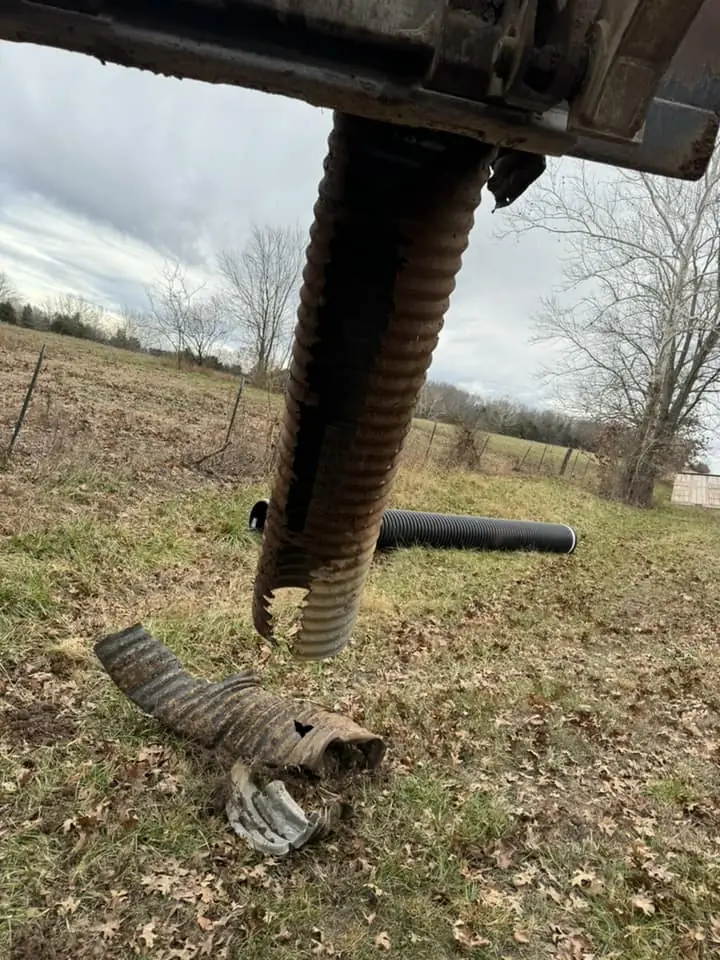
Why Trench Depth Matters
Getting depth right isn’t arbitrary. Each utility has specific requirements based on physics and code:
Water Lines: The Frost Line Rule
In SW Missouri, the frost line typically runs 30-36 inches deep. A water line installed above that depth will freeze during hard winters. Even rare once-a-decade deep cold snaps can burst a shallow water line, flooding yards and cutting off water mid-winter.
Code requirement for Missouri residential water service:
- Minimum 30 inches below finished grade in most counties
- 36-42 inches preferred for rural lines and high-traffic areas
- Deeper in rocky ground where full 30-inch depth may not be achievable — in that case, insulation and careful routing substitutes for depth
An experienced excavator sets trench depth based on location, soil, and intended use. Cutting corners here costs you a burst line in January.
Sewer Lines: Grade Is Everything
Sewer lines don’t just need depth — they need the right slope. Gravity does the work, so the line has to drop consistently from the house to the septic tank or sewer main.
Typical sewer slope: 1/4 inch per foot (about 2% grade). Too flat and waste doesn’t flow. Too steep and liquid outruns solids, causing clogs. The same grade rules apply to septic system installation — the inlet line from the house to the tank, and from the tank to the drainfield, both need the right slope to function.
For a 100-foot run, that’s 25 inches of drop. The trench at the far end is 25 inches deeper than at the house. Long runs can mean 4-6+ foot trench depth at the outlet.
This is one reason good excavators coordinate closely with plumbers — the trench dimensions come from the pipe engineering, not from a generic rule of thumb.
Electric and Gas: Above the Frost Line
Electric service lines and gas lines don’t care about freezing the way water does. Their depth requirements come from protecting the utility from damage and preventing strikes by other work.
Typical minimums:
- Residential electric service: 18-24 inches
- Residential gas: 18 inches
- Larger electric services (400A and up): 36+ inches
- Transmission lines: Much deeper, with engineered specifications
These are minimums. Many utility companies require their specific standards, which may exceed code minimums.
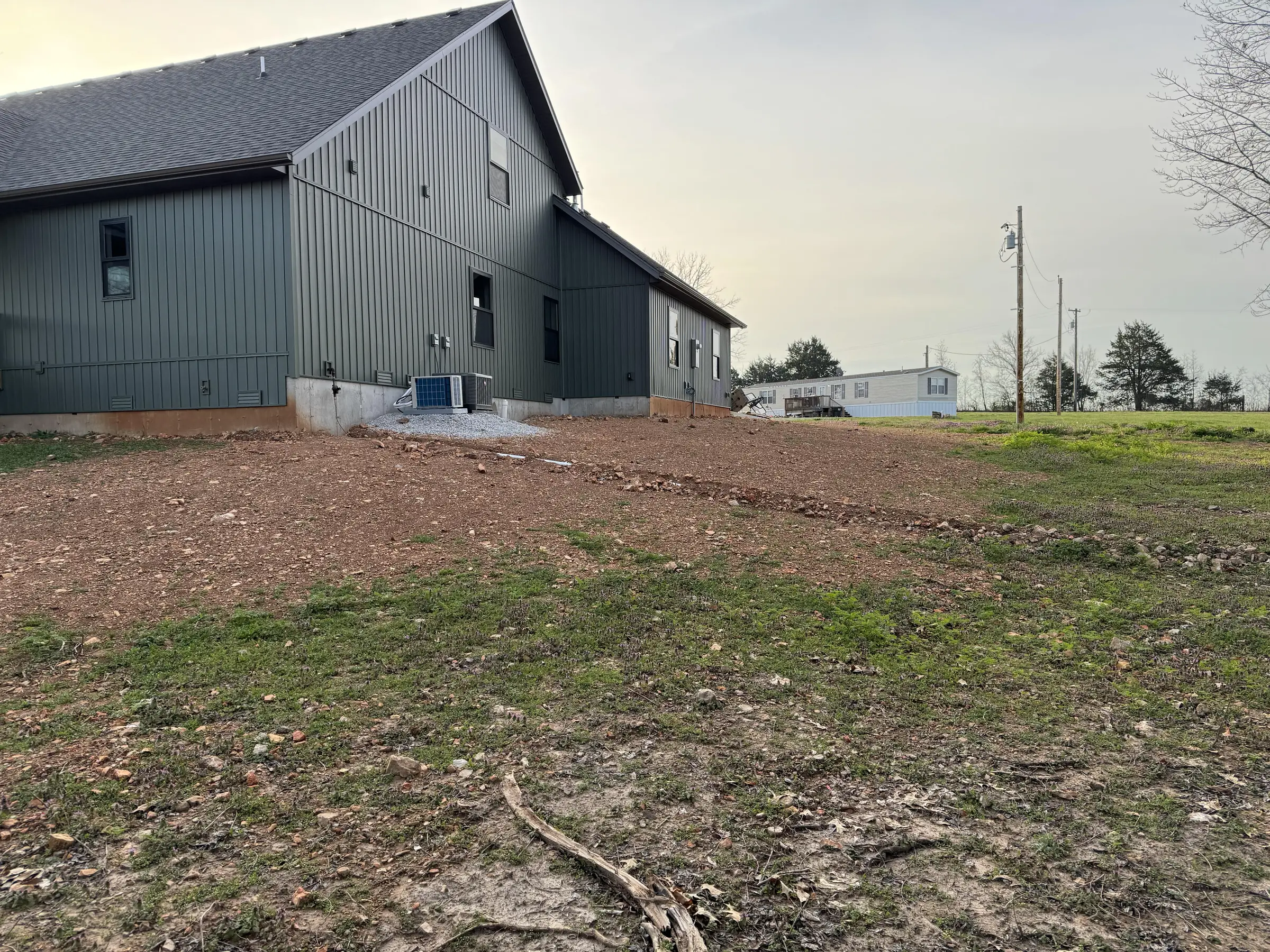
Call 811 — Always, Every Time
Before any trenching work starts, the utility locate service (Missouri One Call, accessible by dialing 811) has to come out and mark existing underground utilities. This is:
- Free — no charge to homeowner or contractor
- Required by law in Missouri
- Requires 3 business days’ notice before work starts
The locate crew comes out and paints or flags the property:
- Red = electric
- Yellow = gas, oil, propane
- Blue = potable water
- Green = sewer, storm drain
- Orange = telecom, alarm, cable
- White = proposed excavation area (marked by property owner or contractor before the locate)
Skipping 811 is how gas lines get hit. Hitting a gas line means evacuation, repair costs, potential fines, and in worst cases, explosions. Electric strikes can be fatal. Water strikes flood basements.
No legitimate excavator starts a trenching job without 811 marks visible. If a contractor suggests skipping this step, find a different contractor.
Separation Rules: What Can’t Share a Trench
Utilities have to stay separated from each other. Common rules:
- Water and sewer: minimum 10 feet apart horizontally, or water must be at least 18 inches above sewer in a shared trench
- Water and gas: minimum 12 inches separation
- Electric and gas: minimum 12 inches separation, with electric above gas
- Telecom lines: usually can share with other utilities if properly insulated, but check with your provider
When these rules are violated, the water source can be contaminated by sewage, gas leaks can spread to water lines, or electric and gas can interact catastrophically during strikes. Code enforcement is strict about this for good reason.
Planning a new service installation? Every utility company will have their own specific requirements on top of code. Talk to them before trenching.
The Trenching Process
A typical trenching job runs through these steps:
1. Site Walk and Planning
Before any digging, we walk the route with the property owner. Mark proposed routing. Identify conflicts with trees, structures, septic fields, or existing utilities. Call 811 for locates.
2. Locate Results
811 marks the utilities. We confirm their positions match our plan. If there are conflicts, we reroute before digging.
3. Excavation
Using either a trencher (dedicated narrow trench machine) or a mini excavator, we dig the trench to specified depth and grade. Trenchers are faster for long straight runs. Mini excavators are better for variable depth, tight spaces, or rocky ground.
4. Rock Handling
SW Missouri trenching often encounters rock. Options:
- Hammer through with a breaker attachment on the excavator
- Route around if possible
- Shallow the line and provide insulation if code allows
Rock significantly slows work. A straightforward 200-foot water line in good soil might take 4 hours. The same line through heavy rock can take 2 days.
5. Pipe Installation
Handled by the appropriate trade — plumber for water/sewer, electrician for electric, gas tech for gas. The excavator coordinates access so the installer has open trench to work in.
6. Bedding and Backfill
Before the trench gets filled, the pipe is bedded in suitable material (usually sand or fine gravel) to protect it. Then the trench backfills in lifts, compacted as it goes to prevent settling.
7. Restoration
Final surface restoration — grading, seeding, sod replacement, paving patch, whatever the surface was before. For pasture or yard, we replace topsoil and re-seed. For driveways, we patch to match.
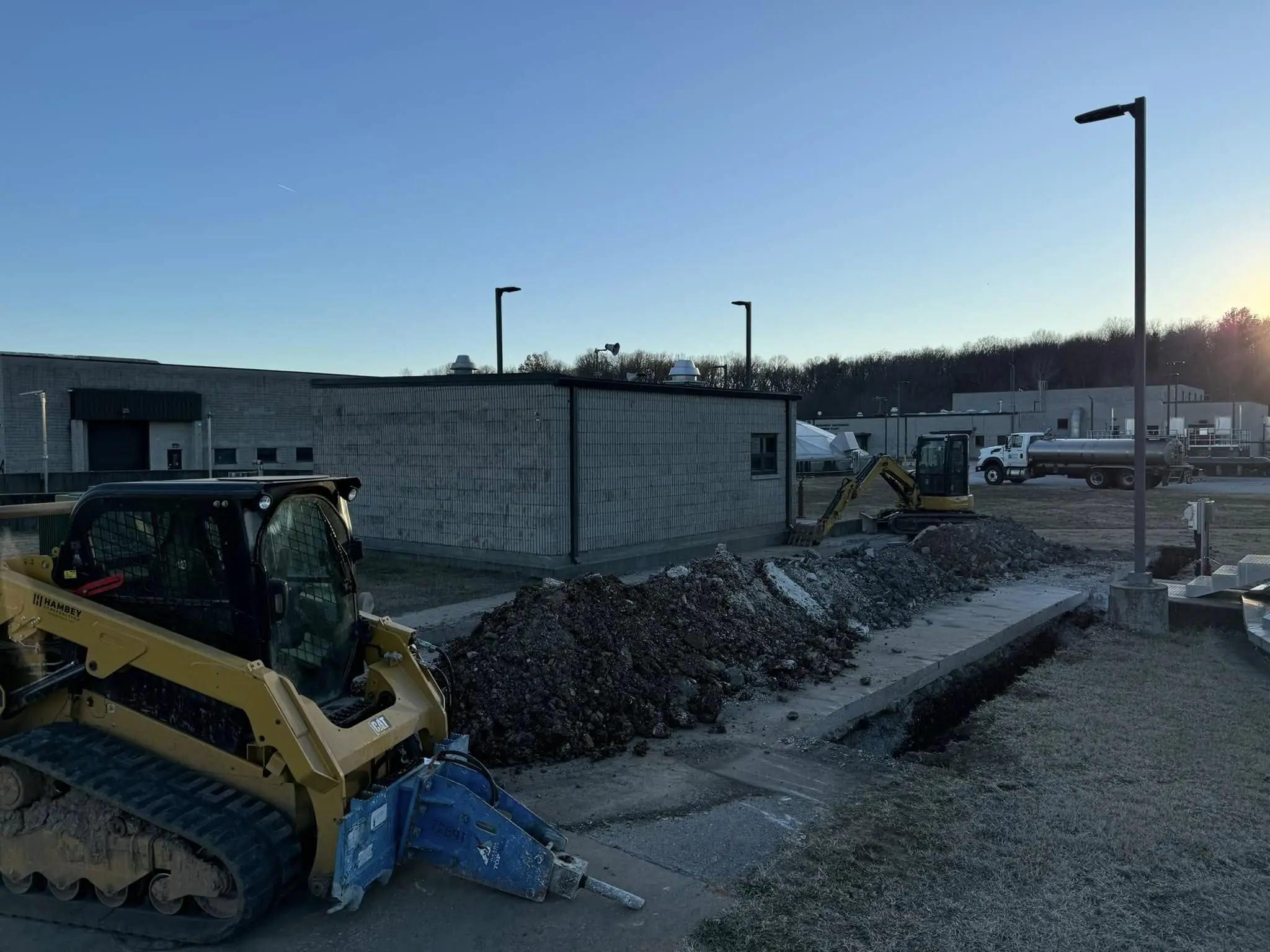
Cost Factors in SW Missouri
Citation capsule: In southwest Missouri, utility trenching costs are most influenced by subsurface rock conditions, with rocky sites commonly costing 30-50% more than comparable runs through clay or loam. Trench depth requirements also affect pricing significantly — water lines requiring full 36-inch frost-line depth cost substantially more than shallower electric or telecom runs through the same ground.
Here’s what moves the price:
Rock — biggest single factor. Rocky ground can double the cost per foot.
Depth — deeper trenches take exponentially longer, especially in rock.
Access — working in tight spaces or around obstacles slows everything down.
Length — longer runs usually price better per foot (mobilization spreads across more footage).
Restoration — simple dirt/grass restoration is cheap; driveway cuts, landscaping repair, and hardscape patches add cost.
Permits — most residential trenching doesn’t need separate permits, but some counties require them for specific types of work.
When to Do Utility Trenching
Best seasons for trenching in SW Missouri:
- Late summer through fall (August-November): firm ground, dry weather, stable trench walls
- Winter (December-February): frozen ground can be challenging for digging but prevents wall collapse; works well when weather cooperates
- Avoid spring (March-May): saturated ground, trench wall collapse risk, scheduling delays from rain
For new construction projects, trenching happens in a specific window — after rough grading, before foundations and final grading. Miss that window and the work becomes much more expensive because trenches cross finished areas.
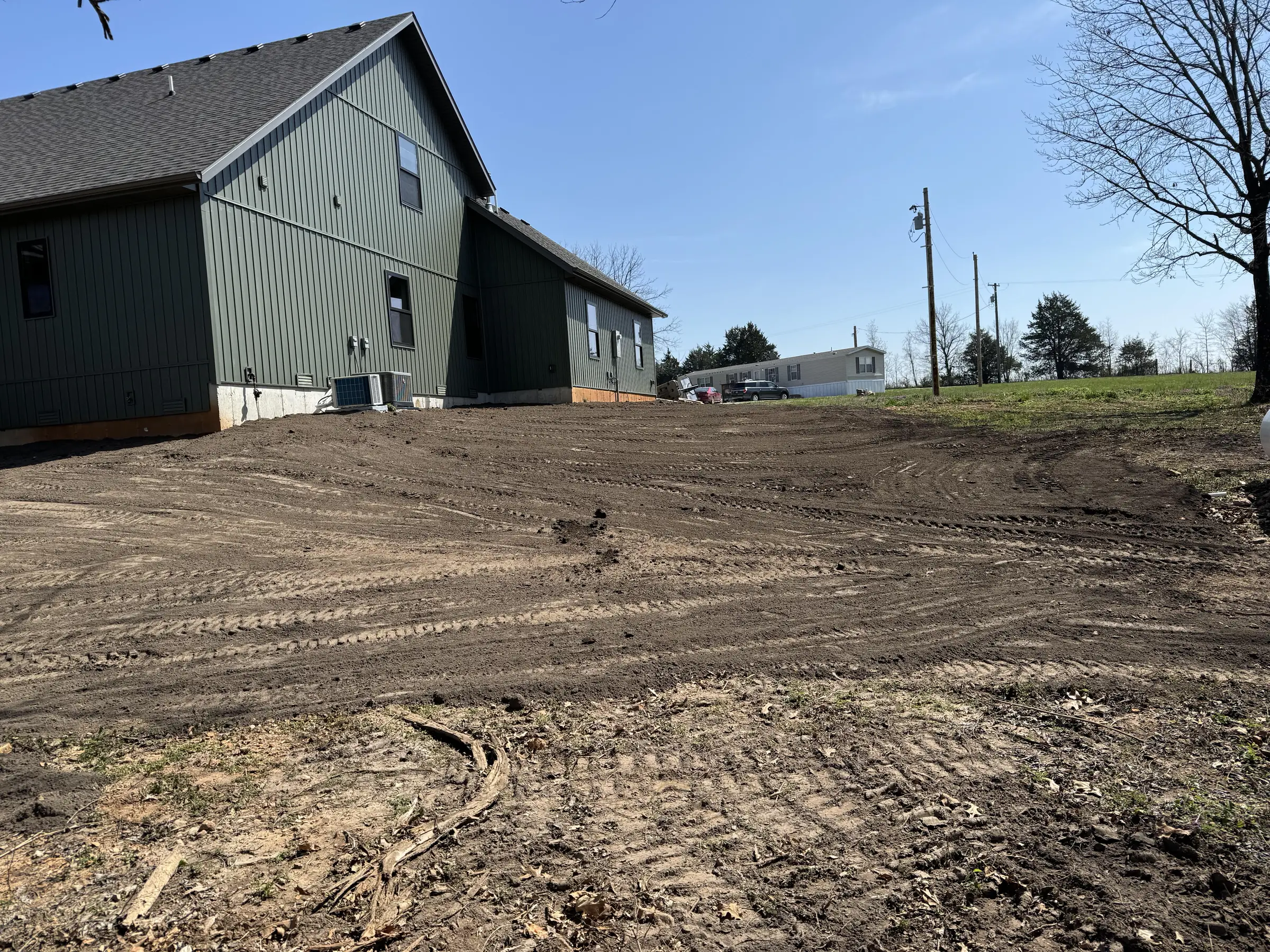
Getting Your Project Scheduled
Calvin Smith Excavating handles trenching for water, sewer, electric, and gas service lines across SW Missouri. We coordinate with plumbers, electricians, and utility companies so the trench is ready when they need to install, and we handle all the site work around it.
Recent addition to our equipment lineup: dedicated trenching equipment for cleaner, faster water and utility runs.
Call (417) 719-0643 to schedule a site walk.
Frequently Asked Questions
How deep does a water line need to be in Missouri?
At least 30 inches below finished grade in most Missouri counties, with 36 inches preferred. The minimum is based on the frost line — lines shallower than that risk freezing during hard winters. Rural and rocky properties sometimes need special consideration, including insulation or alternative routing.
Can I dig my own utility trench?
For some situations, yes — short runs in open ground with no buried utilities in the area can be DIY. You must still call 811 for locates (required by law, no exceptions). For longer runs, rock conditions, or any trench that exceeds 4 feet deep, professional excavation is safer and usually faster.
What’s the difference between a trencher and an excavator for utilities?
A trencher is a dedicated machine that cuts a narrow, consistent-depth trench quickly. Excellent for long straight runs in good soil. An excavator digs wider and variable-depth trenches, handles rock better, and works in tight spaces. Most professional excavation contractors use both depending on the job.
How long does a trench stay open?
As short as possible. Open trenches are a safety hazard and can collapse in wet weather. Typical practice: excavate, install pipe, backfill — all within the same day or two. Trenches left open overnight need safety barriers and shouldn’t be in high-traffic areas.
Do I need a permit for utility trenching?
For residential property, usually no permit is required for the trench itself. Permits may be required for: connections to public utilities (water main tap, sewer lateral), work in public right-of-way, or trenching in floodplains. The utility company and local permit office are the people to check with for your specific job.
Calvin Smith Excavating — utility trenching and excavation across SW Missouri. Dedicated trenching equipment, owner-operated, USDOT 4119419. (417) 719-0643.