

Pond Cleaning in Missouri: When, How, and What It Costs
A typical half-acre to one-acre pond cleaning in SW Missouri runs $3,000-$8,000 depending on access, sediment depth, and what needs repair beyond basic muck removal. Ponds need cleaning every 10-20 years to stay healthy and deep. The best window is late summer through early fall when water levels are naturally low and the ground around the pond is firm enough for equipment. Here’s the full process.
TL;DR:
– Typical cost: $3,000-$8,000 for a half-acre to one-acre pond
– Best season: Late summer to early fall (July-October)
– Main scope: Drain or lower water, remove sediment, repair banks, check outlet structure
– Frequency: Every 10-20 years for well-built ponds, more often if the watershed delivers heavy sediment
– Fish management is often a separate cost — relocating or restocking adds time and coordination
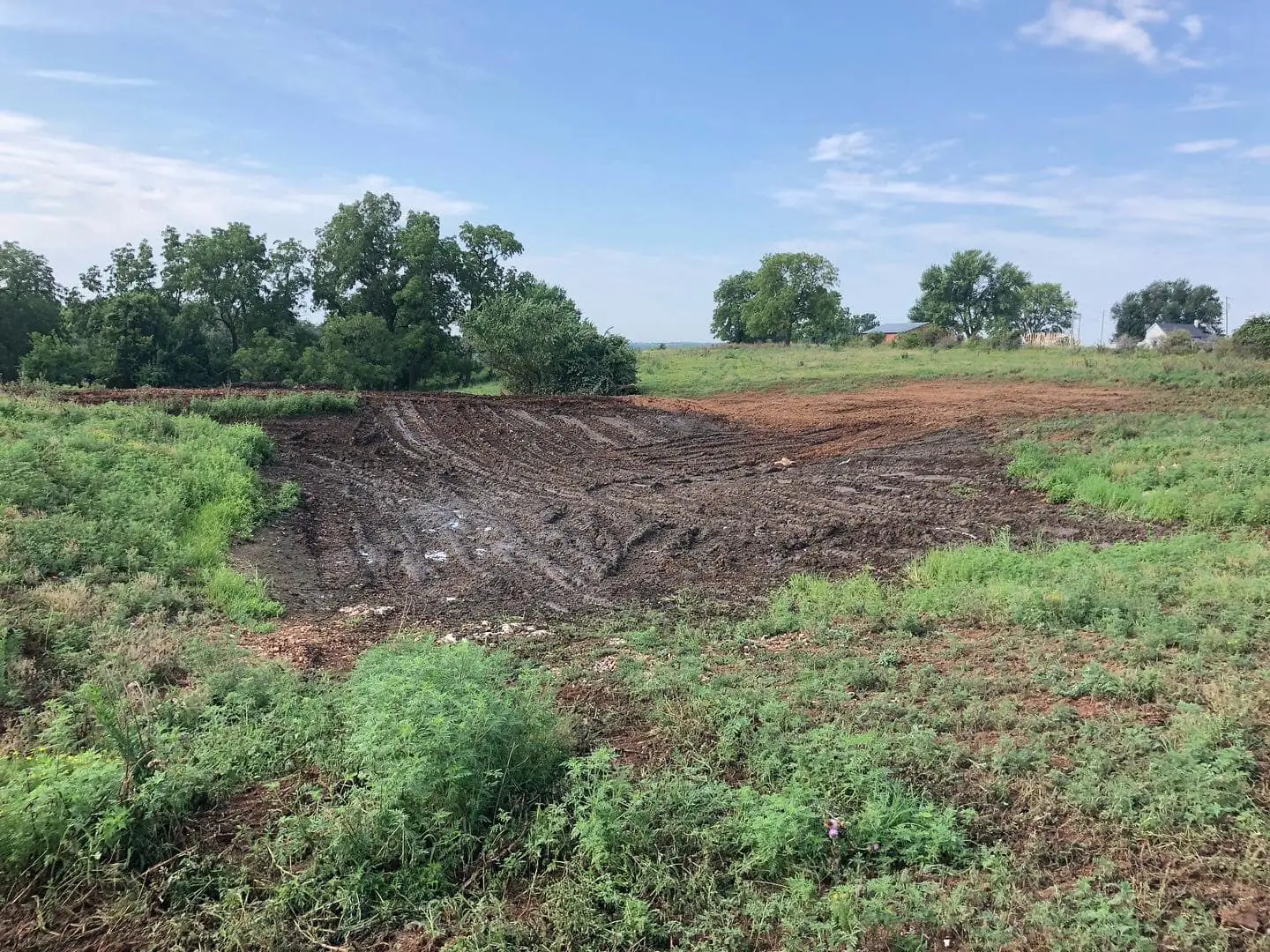
When Does a Pond Need Cleaning?
A pond needs cleaning when it’s filled with enough sediment to lose its depth, its water quality has degraded, or its structural features (spillway, dam, banks) have deteriorated. Specific warning signs:
Loss of depth. A pond originally dug to 10 feet that now measures 4 feet has accumulated 6 feet of sediment. That’s a cleaning job.
Increased algae blooms. Shallow, warm water grows algae faster. If a previously clean pond is developing heavy summer algae, sediment buildup is often the cause.
Fish kills in summer. Warm, shallow water holds less oxygen. When pond depth drops below about 6 feet, summer fish kills become common.
Banks washing into the pond. Erosion from heavy rain moves bank material into the water. Eventually the pond loses both perimeter and capacity.
Outlet structure problems. Clogged or damaged standpipes, spillways, or drainage structures need to be addressed during cleaning.
Leaking dam. If your pond is losing water faster than evaporation should account for, the dam or bottom seal may have developed a leak that needs repair.
Most SW Missouri farm ponds go 15-20 years before needing major cleaning. Ponds in watersheds with active erosion (farmed ground uphill, recent construction, bare pasture) may need cleaning more often.
The Pond Cleaning Process
A thorough cleaning takes 5-10 working days depending on pond size and conditions. Here’s the sequence:
1. Water Removal
The pond has to be drained or lowered significantly before equipment can work. Options:
Natural drawdown: Open the outlet structure and let the pond drain over days or weeks. Cheap, slow, depends on the outlet design.
Pump drawdown: Use gas or electric pumps to move water faster. Water can be pumped to a nearby field, ditch, or another pond.
Partial drawdown: Lower the water to a working level without fully draining. Sometimes works for light cleanings but limits what can be done.
Timing matters here. Draining during fish spawning season (spring) is hard on any fish population. Late summer or early fall, when water is naturally lower, makes drawdown faster and easier on wildlife.
2. Fish Management
If the pond has established fish you want to keep, they need to go somewhere. Options:
- Relocate to another pond (yours or a neighbor’s). Requires nets, buckets, and fast work.
- Harvest. If you’re going to replace the fish anyway, letting friends and family take what they want.
- Accept loss. In drained ponds, surviving fish are usually minimal anyway.
- Temporary holding tanks. For valuable fish populations, sometimes worth setting up a pump-aerated holding system.
For most SW Missouri farm ponds with generic bass, bluegill, catfish populations, simple relocation or restocking is usually the answer.

3. Sediment Removal
Once the pond is drained enough for equipment to work, we start removing sediment. This is the main event. A track loader or excavator scoops muck from the bottom and either:
- Spreads it on adjacent fields (great fertilizer if chemistry works)
- Piles it for later use
- Hauls it off-site (rare, and expensive)
Sediment depth varies. A pond with 2 feet of muck is a fast job. A pond with 6 feet of accumulated sediment takes days of work per section.
Dried sediment from an established pond is usually excellent fill or topsoil, high in organic matter. Many property owners welcome it spread on their pasture or garden areas.
4. Bank Repair and Reshaping
With the pond low or dry, bank conditions are visible. Common repairs:
- Erosion repair. Areas where banks have washed out get re-shaped and compacted.
- Bank protection. Rip-rap (rock) placement in high-erosion zones.
- Steepening or flattening. Adjusting slopes for fish habitat or easier access.
- Shelf construction. Creating shallow shelves where plants and spawning fish can thrive.
This stage often adds significant value. Most pond cleanings aren’t just about removing mud — they’re about restoring the pond to better condition than it’s been in years.
5. Outlet Structure Repair
Spillways, standpipes, drainage structures — all of these need inspection during cleaning. Common issues:
- Concrete spillways with cracks or erosion
- Standpipes clogged with debris or damaged by ice
- Emergency spillways that have eroded below design grade
- Anti-seep collars on older ponds that need checking
Repair costs here vary widely. A clear spillway cleanout might take half a day. A full standpipe replacement or spillway rebuild can run several thousand dollars.
6. Refill and Restock
Once work is complete, the pond starts filling. In SW Missouri, that usually means waiting for fall rains and winter snowmelt. A drained 1-acre pond typically takes 4-12 months to fully refill depending on watershed and weather.
Fish restocking usually happens after the pond reaches its normal operating level. Missouri Department of Conservation has good resources for pond stocking strategies based on your goals (sport fishing, family pond, farm water).
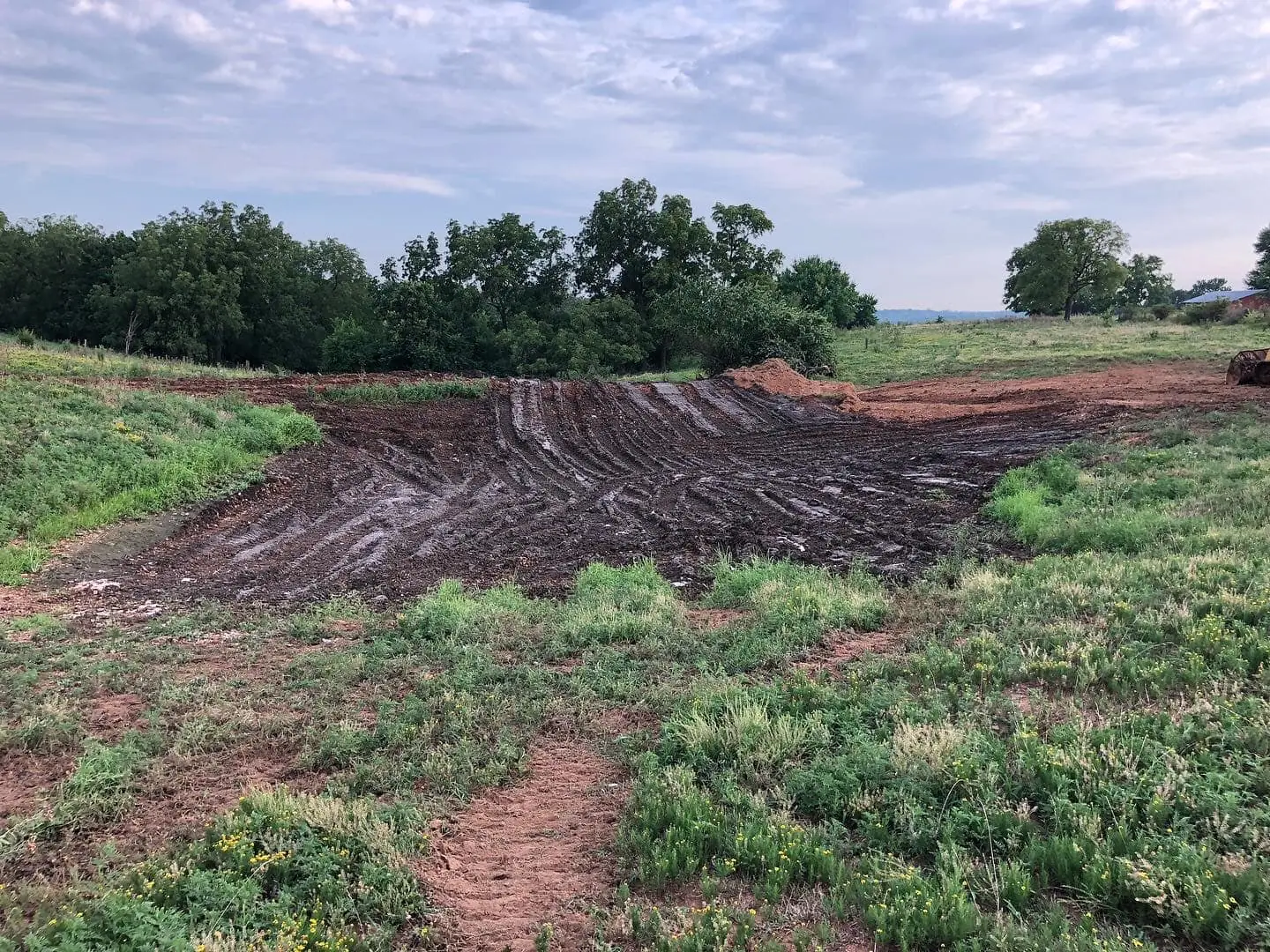
Why Late Summer to Fall Is the Best Time
Citation capsule: In southwest Missouri, pond cleaning work is most efficient between late July and mid-October, when natural water levels are at their lowest and the surrounding ground is firm enough for heavy equipment. Cleaning during spring (March-May) is significantly slower and more expensive because the elevated water table, wet banks, and ongoing rainfall impede dewatering and equipment access.
The timing advantage is real. Here’s why:
Lower starting water levels. By August in SW Missouri, most ponds are at their lowest natural level. That means less water to drain and less time waiting.
Firm surrounding ground. Spring mud makes pond work nearly impossible — the banks become unstable and equipment can’t get close. Late summer and early fall ground is firm.
Refill timing. Completing work in October positions the pond to refill through fall and winter rains, ready for spring by the time fishing season comes around.
Less fish stress. Draining during cooler water temperatures (fall) is less stressful on any fish being relocated.
Better for burning or spreading sediment. Dried muck spreads and handles better when it’s had warm weather to cure.
What a Pond Cleaning Costs
Real SW Missouri ranges, based on standard cleanings:
| Pond size | Typical cost |
|---|---|
| Small pond (under 1/4 acre) | $2,500-$5,000 |
| Half-acre pond | $3,000-$6,500 |
| 1-acre pond | $5,000-$10,000 |
| 2-acre pond | $8,000-$15,000+ |
Factors that push the cost up:
- Access issues (trees to work around, narrow driveway)
- Deep sediment (over 4 feet)
- Structural repair (dam, spillway, standpipe)
- Off-site sediment hauling
- Full bank reshaping
Factors that keep the cost down:
- Good access for equipment
- Sediment can be spread on adjacent property
- Minimal structural repair needed
- Owner willing to handle fish relocation
Getting a Real Quote
Every pond is different. A real quote requires walking the site — looking at access, measuring existing depth, checking the outlet, and discussing what fish management you want.
Calvin Smith Excavating handles pond cleaning across Walnut Grove, Springfield, Republic, Bolivar, Ash Grove, Willard, Nixa, and Ozark. Free site walks. Honest quotes in writing.
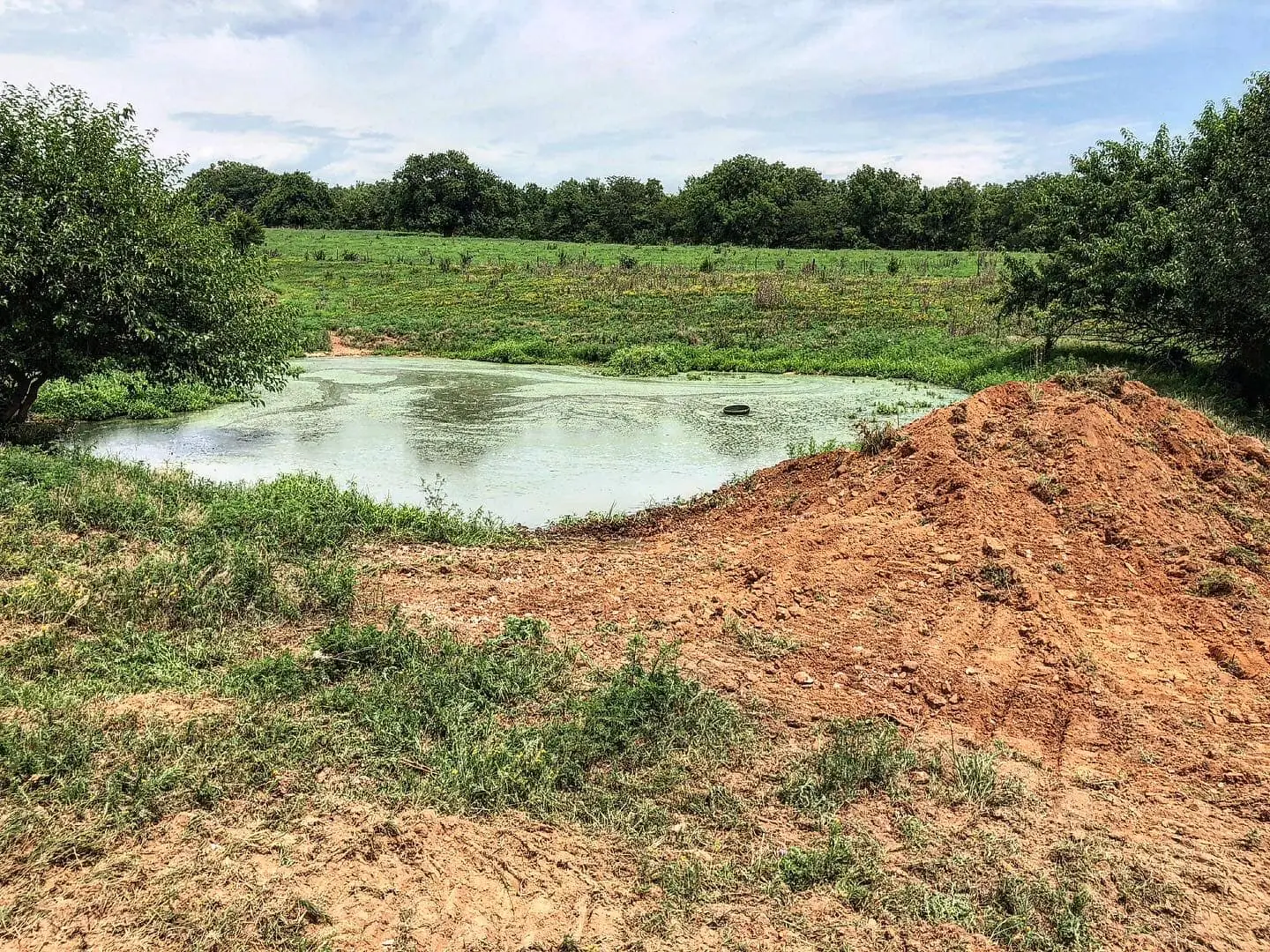
Call (417) 719-0643 to schedule a pond cleaning site walk.
Frequently Asked Questions
How often should a pond be cleaned?
Every 10-20 years for most SW Missouri farm ponds. The exact frequency depends on the watershed — ponds below actively farmed or eroding ground need cleaning more often than ponds in stable woodland or pasture settings. If you see significant loss of depth, frequent algae problems, or summer fish kills, cleaning is overdue.
Can I clean a pond without draining it?
Partially. Some sediment can be removed with long-reach equipment working from the bank. Aquatic weed removal and bank shaping can happen at partial drawdown. But full cleaning — reaching the middle of the pond and the deeper sediment — requires significant dewatering. A “dry” cleaning is always cheaper and more thorough.
What do you do with all the sediment?
Most SW Missouri sediment is organic-rich mud that makes excellent soil amendment. We spread it on adjacent pasture or fields when possible. Some property owners stockpile it for garden use. Hauling off-site is a last resort — expensive and usually unnecessary since the material is valuable.
Do I need any permits to clean a pond?
Usually not. Cleaning an existing pond is considered maintenance rather than new construction. Exceptions: if you’re dredging spoils into a wetland or stream (which we don’t do), or if the pond work involves the dam structure on a permitted dam. For typical farm pond cleaning, no permit is required.
How long does a pond stay clean after cleaning?
Depends on the watershed. In stable pasture or woods, a pond can stay clean for 15-20 years. Below active farmland, new construction, or erosion-prone ground, heavy sediment deposition can recur within 5-10 years. Good watershed management (grass strips, erosion control, contour plowing) extends the time between cleanings significantly.
Calvin Smith Excavating — pond cleaning, repair, and construction across SW Missouri. (417) 719-0643.