

Gravel vs Concrete Driveway in Missouri: Which Is Right for You?
If you’re building a driveway in southwest Missouri, gravel is almost always the right answer for rural properties, and concrete usually wins for short suburban driveways. A 500-foot gravel driveway runs $6,000 to $15,000 installed. Putting concrete across that same distance would cost $40,000+ — and the concrete would still crack from our freeze-thaw cycles. Here’s how to make the call for your specific situation.
TL;DR:
– Gravel upfront cost: $2-$5 per square foot installed — 60-70% cheaper than concrete
– Concrete upfront cost: $6-$12 per square foot installed — more durable but pricier
– Gravel lifespan: 10-20+ years with top-ups every 3-5 years
– Concrete lifespan: 30+ years, but freeze-thaw in Missouri causes cracking
– Gravel wins for: long rural driveways, sloped properties, heavy equipment access, tight budgets
– Concrete wins for: short urban/suburban driveways, clean aesthetic, low-maintenance preference
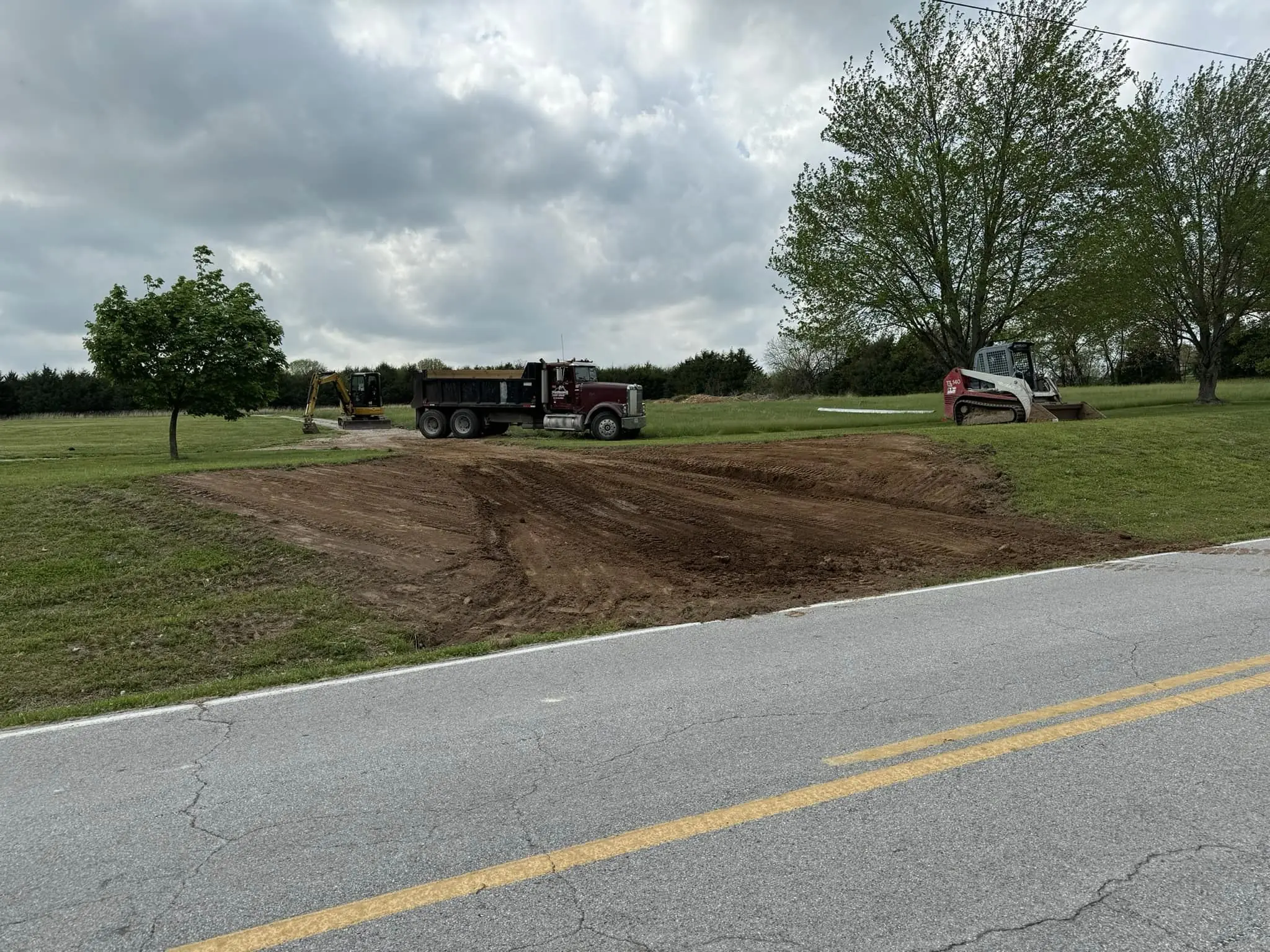
The Real Cost Difference
On most residential jobs, cost is the first thing that shapes the decision. Let me give you real numbers for southwest Missouri in early 2026.
A standard 12-foot-wide driveway with base prep included:
| Length | Gravel (installed) | Concrete (installed) |
|---|---|---|
| 100 ft | $2,000 – $4,000 | $6,000 – $12,000 |
| 250 ft | $4,500 – $8,500 | $15,000 – $30,000 |
| 500 ft | $8,000 – $16,000 | $36,000 – $72,000 |
| 1000 ft | $15,000 – $28,000 | $70,000+ |
Concrete pricing scales roughly linearly with length, while gravel scales a little better because the base preparation is a fixed cost for the first section. You can see why most rural SW Missouri driveways are gravel — by the time you’re paying for a quarter-mile of concrete, you could have bought a second truck.
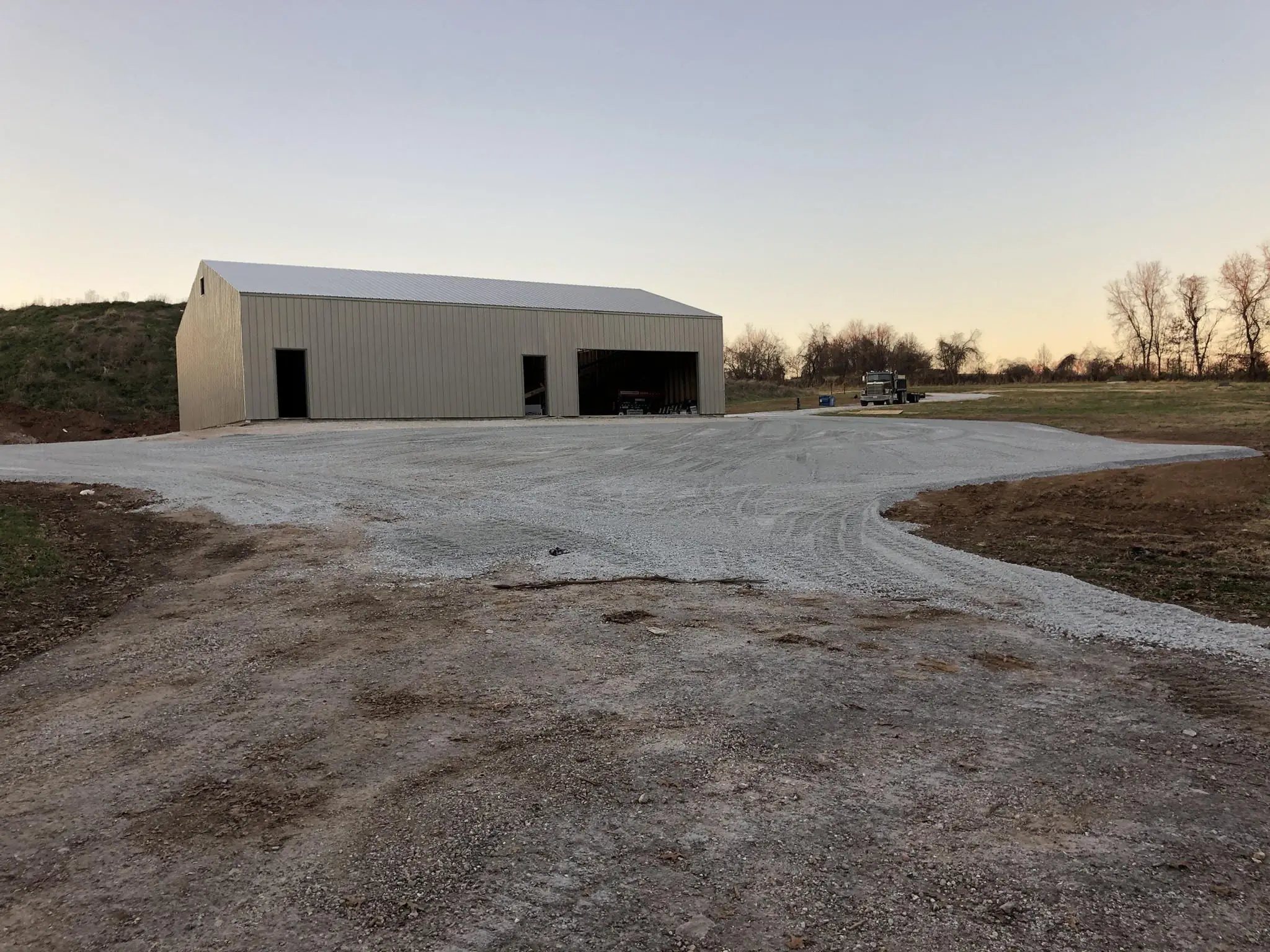
Keep in mind these numbers include the basics: rough grading, proper base material, finished surface, and typical culvert work. They don’t include retaining walls, extensive tree clearing, complicated drainage, or significant elevation changes. Those are extras on either material.
How Missouri Weather Affects Each Material
Southwest Missouri sees 20-40 freeze-thaw cycles per winter. That’s the key factor that makes our region harder on concrete than, say, parts of Texas or Florida. Every cycle where water seeps into a hairline crack and then freezes, that crack gets slightly bigger. Over a decade, those hairlines become structural problems.
Concrete in Missouri
Quality concrete with proper base prep, control joints, and 4+ inches of thickness lasts 30+ years here. Cheap concrete, thin pours, or bad base work can crack noticeably within 5 years. The problem is that concrete cracking in a driveway is cosmetic until it becomes structural — and then you’re looking at tear-out and replacement rather than repair.
Sealing helps. A concrete driveway sealed every 3-5 years handles freeze-thaw better and stays cleaner. Skip sealing and you’re reducing the material’s effective lifespan.
Gravel in Missouri
Gravel flexes with freeze-thaw. Water drains through instead of getting trapped. What gravel loses to our climate is material — every spring, gravel migrates toward the low points of the driveway and some disappears into the base. That’s why gravel driveways need periodic top-ups of fresh rock.
A well-built gravel driveway with proper compacted base and 4-6 inches of finish gravel typically needs a moderate refresh ($500-$1,500 for a typical driveway) every 3-5 years, plus occasional grading to smooth out ruts and low spots. Over 20 years, that maintenance still comes in well below replacement concrete cost.
Weight Capacity: Heavy Equipment Access
Citation capsule: For rural southwest Missouri driveways that see regular farm truck, livestock trailer, or heavy equipment traffic, compacted gravel with proper base preparation typically handles weight loads up to 80,000 pounds — sufficient for standard commercial trucks and construction equipment. Concrete driveways handle similar loads but require thicker pours (6+ inches) and reinforcement for sustained heavy traffic, which roughly doubles the installed cost per square foot.
If your driveway will see farm equipment, livestock trailers, delivery trucks, or construction equipment, gravel is usually the better call. Not because concrete can’t handle the weight — it can, if you pour it thick enough and reinforce it properly — but because gravel is cheaper to repair when damage happens.
Pull a 30-foot stock trailer with 20,000 pounds of cattle across a residential-spec concrete driveway a few times a week and you’ll see the surface fail in spots. Repairing concrete means saw-cutting and patching. Repairing gravel means spreading another ton of rock and regrading.
For properties that regularly host heavy loads — working farms, rural homes where the delivery truck or propane tank truck needs regular access, construction sites under active build — gravel is almost always the right choice.
Drainage and Slope
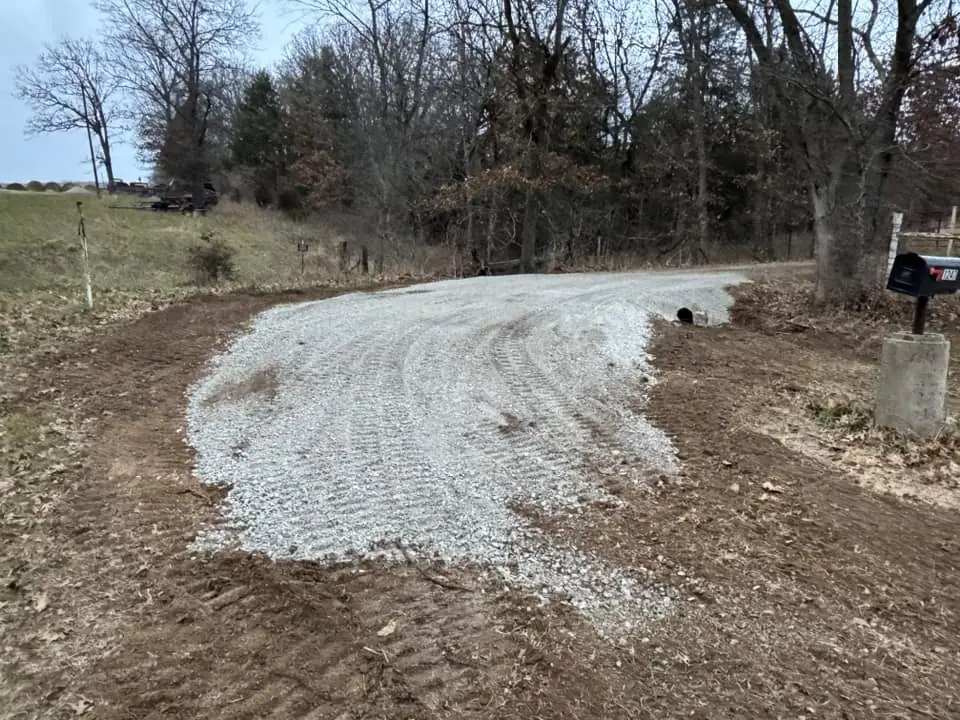
Southwest Missouri has a lot of rolling terrain. Long driveways across sloped property bring drainage into the picture. Gravel handles runoff naturally — water moves across and through the surface. Concrete forces water to run along the surface, which can create erosion at the edges and require engineered drainage (culverts, swales, channel drains) to manage.
On properties with significant slope, a gravel driveway with smart drainage features usually outperforms concrete. We can build crown (center-high, edges-low) into a gravel driveway easily, and water sheets off into the ditch. Getting the same drainage performance with concrete requires more engineering and tends to be expensive.
When Concrete Wins on Drainage
Short driveways, flat yards, or urban settings where you want a clean connection to existing sidewalks and curbs — concrete is cleaner here. A 30-foot driveway in a subdivision isn’t the place to fight freeze-thaw with gravel.
Aesthetics and Neighborhood Fit
Gravel looks rural. Concrete looks suburban. That’s not a judgment — it’s a fit question.
A gravel driveway on a rural 5-acre property looks appropriate, fits the land, and reads as “country home.” The same gravel driveway on a subdivision lot with manicured lawns and concrete sidewalks looks out of place. If your neighbors all have concrete, and your property style is clean-line residential, concrete is probably the better call.
The in-between answer for some properties is concrete at the street connection and gravel for the main run. An apron of 50-100 feet of concrete where the driveway meets the county road keeps the material off the pavement and looks cleaner. Then gravel takes over for the long haul up to the house. We do this fairly often — it’s a good compromise on cost and looks.
Maintenance Requirements
Gravel maintenance schedule
- Every 6-12 months: Quick grade to fill ruts and redistribute surface rock
- Every 3-5 years: Top-up with 1-2 inches of fresh finish gravel
- Every 10-15 years: Major refresh — re-grade, add base material if needed, new finish layer
Total maintenance cost over 20 years for a typical 500-foot rural driveway: roughly $3,000-$6,000. That’s on top of the original $8,000-$16,000 install.
Concrete maintenance schedule
- Every 3-5 years: Sealing ($0.50-$1.50 per square foot)
- As needed: Crack repair when hairlines appear
- Every 15-30 years: Potential section replacement where damage accumulates
Total maintenance cost over 20 years: $2,000-$4,000 in sealing plus crack repairs. If no major replacement is needed, concrete has lower long-term maintenance cost than gravel.
Which Should You Pick?
Here’s a simple decision framework for SW Missouri:
Pick gravel if:
– Driveway is over 200 feet
– Property is rural or semi-rural
– Heavy equipment or trailers will use the driveway regularly
– Budget is a primary concern
– Property has slope or drainage considerations
– You prefer the rural aesthetic
Pick concrete if:
– Driveway is under 150 feet
– Property is suburban or urban
– You want a low-maintenance, clean look
– Long-term durability is more valuable than upfront cost
– The driveway connects directly to existing concrete (street, sidewalk, garage slab)
Consider the combination (concrete apron + gravel main run) if:
– Driveway is over 200 feet but you want a clean street connection
– County requires hard-surface apron at the road
– You want the rural look with less tracking of gravel onto pavement
Getting Your Driveway Built Right
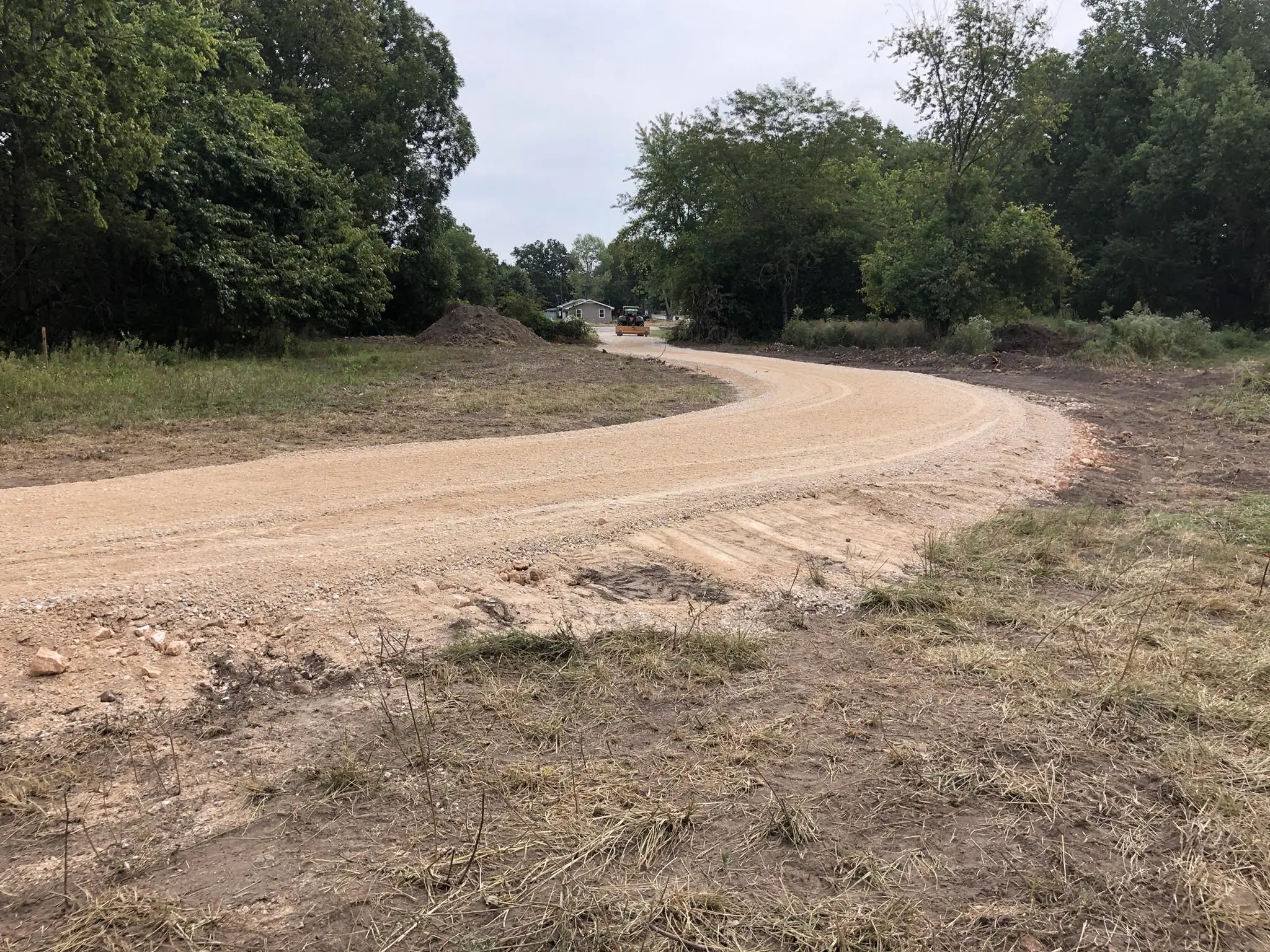
Proper base preparation matters more than the surface material. A gravel driveway on a bad base develops potholes and ruts fast. A concrete driveway on a bad base cracks and settles. Either way, skipping the dirt work underneath costs you in the long run.
Calvin Smith Excavating handles gravel driveway installation, grading, culvert work, and the earth prep that both gravel and concrete driveways need. For concrete pours themselves, we work with several local concrete contractors — I can coordinate the handoff if you’re going that route.
Call (417) 719-0643 for a free site walk to look at your driveway project. I’ll give you honest numbers on both material options for your specific property.
Frequently Asked Questions
How thick should a gravel driveway be in Missouri?
A typical residential gravel driveway needs 4-6 inches of compacted base (like 3-inch minus crushed rock) plus 2-4 inches of finish gravel on top (like 3/4-inch clean or similar). Soft ground or heavy use requires thicker base — up to 8 inches total depth isn’t unusual for rural Missouri driveways that see livestock trailer or equipment traffic.
How long does a gravel driveway last in Missouri?
With proper base prep and routine maintenance, a gravel driveway lasts 20+ years before major re-work is needed. Expect to top-up gravel every 3-5 years and grade annually to fix ruts. The base layer itself can last decades if it’s installed correctly on good ground.
Is concrete worth the extra cost in Missouri?
For short driveways (under 150 feet) in suburban settings, usually yes — the lower maintenance and cleaner look offset the higher upfront cost over time. For long rural driveways or properties with heavy equipment traffic, concrete rarely pencils out. The freeze-thaw cycles and weight loads favor gravel for most rural SW Missouri applications.
Can I install a gravel driveway myself?
You can install a short gravel driveway yourself if you have access to a skid steer and know what you’re doing with base preparation. For most homeowners, the equipment rental cost plus the learning curve makes hiring an excavator cheaper in total. Proper base work is the single biggest factor in how the driveway performs long-term.
Do I need a permit for a driveway in Missouri?
If your driveway connects to a county road or highway, you need a driveway permit from the county road commission or MoDOT. These are usually simple applications but required. Internal driveways that don’t touch a public road generally don’t need permits. We handle the permit coordination on most driveway jobs.
Planning a driveway project in southwest Missouri? Calvin Smith Excavating installs gravel driveways, handles all the grading and culvert work, and coordinates with concrete contractors when you want a hybrid install. Call (417) 719-0643 for a free estimate.