

Do I Need a Permit for a Pond in Missouri?
Most private farm ponds in Missouri don’t require a permit — but “most” is doing a lot of work in that sentence. The answer depends on how big the pond is, where the water comes from, whether you’re damming a stream, and what county you’re in. Miss one of those factors and you can end up with a fine from the state, the Corps of Engineers, or both. This guide covers what SW Missouri landowners actually need to check before they call for an excavator.
TL;DR:
– Most private ponds under 5 surface acres on your own land don’t need a state permit — as long as you’re not damming a live stream
– State dam safety permits kick in at 35 feet of dam height or 50+ acre-feet of storage
– If you’re blocking a stream or wetland, federal Clean Water Act rules may apply (Section 404 permit from the Army Corps of Engineers)
– County rules and HOA rules can add more requirements on top of state and federal
– Always call before you dig — and talk to MDNR if the pond is anywhere near running water
When You Don’t Need a Permit (Most Situations)
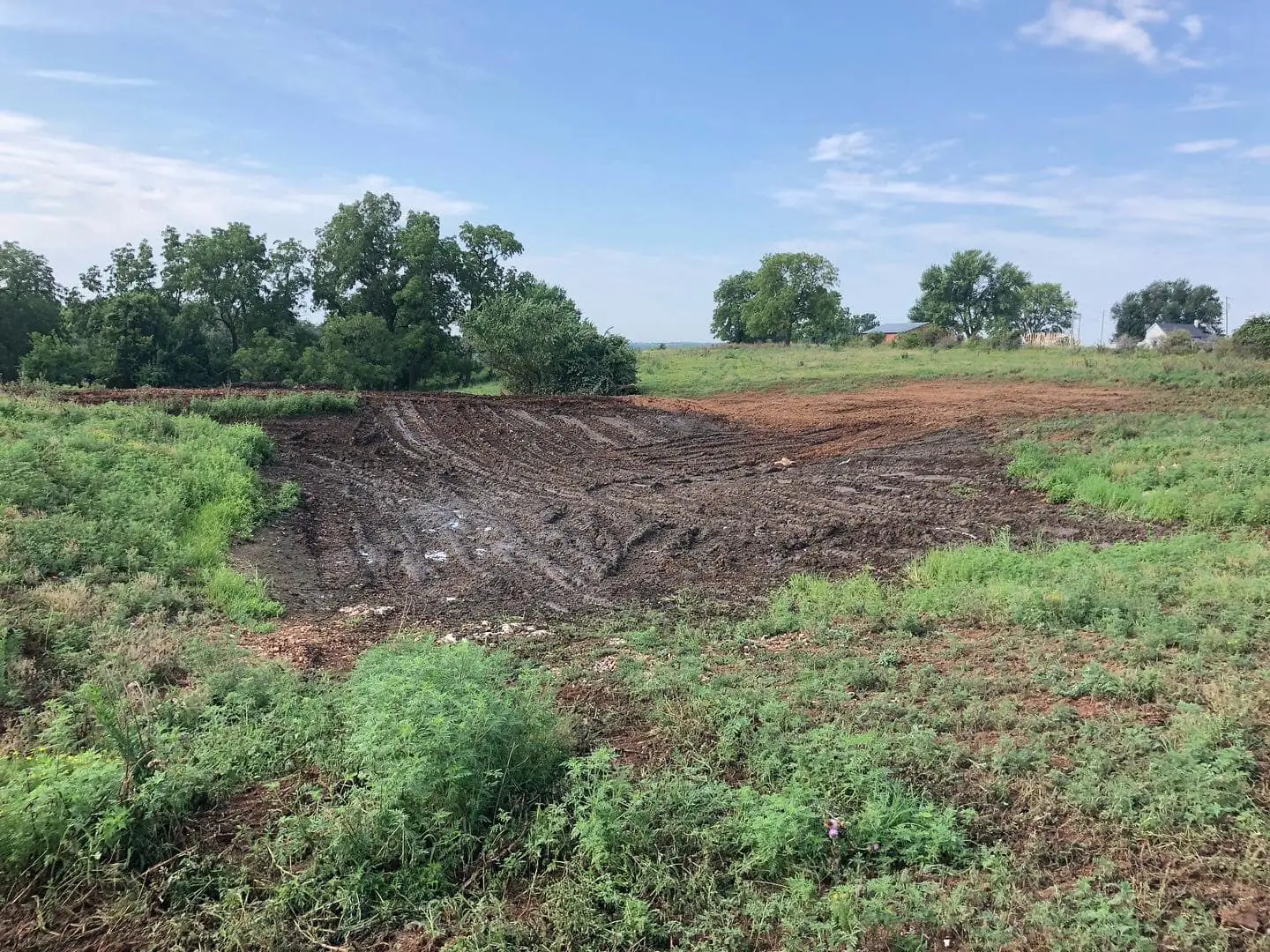
Most ponds we build in southwest Missouri are legal with zero permits. These are the typical cases:
- The pond is on private land you own
- The dam is under 35 feet tall from natural ground to crest
- Total water storage is under 50 acre-feet (an acre-foot is one acre of water surface, one foot deep — so a pond that’s 1 acre at 3 feet average depth is 3 acre-feet)
- The water source is rainfall, a spring on your property, or runoff from your own land
- You’re not blocking a defined stream or creek
- You’re not building in a designated wetland
A typical 1/2-acre to 2-acre farm pond for livestock, fishing, or recreation falls well inside these limits. Most of the ponds I’ve dug in Greene, Polk, Christian, and Webster counties don’t need any paperwork — just good design and honest dirt work.
When You DO Need a Permit
Here’s where it gets real. Any of these conditions triggers a permit requirement:
State Dam Safety Permit (MDNR)
The Missouri Department of Natural Resources Dam Safety Program regulates dams that are 35 feet or taller measured from natural ground to crest, OR dams that store more than 50 acre-feet of water. If your pond design hits either threshold, you need an MDNR dam safety permit before any construction starts.
These are rare on residential property but common on larger ranches or commercial developments. If you’re building a pond to hold hundreds of cattle water supply, or if the natural terrain forces a tall dam to make the pond work, you’re probably crossing the line. An honest excavator will flag this at the site walk and tell you to call MDNR before we start.
Federal Section 404 Permit (Army Corps of Engineers)
This is the one that catches landowners off guard. Under the Clean Water Act, if you’re placing fill material (dirt from your pond excavation) in a “water of the United States” — which includes many streams, wetlands, and their tributaries — you need a Section 404 permit from the U.S. Army Corps of Engineers.
In plain language: if you’re damming an actual creek or stream, even a small one, you probably need a federal permit. Even seasonal streams that dry up in summer can trigger this rule if they flow during rainy periods.

The Corps maintains Nationwide Permits (NWPs) that cover common minor work, but you usually still have to file a pre-construction notification. Skipping this step and getting caught can result in a stop-work order, fines, and a requirement to restore the site at your expense.
The safest approach: if there’s moving water on or adjacent to your proposed pond site, even just a ditch that runs after a rain, call the Kansas City District of the Corps (that’s the district covering most of SW Missouri) before you break ground. It’s a free phone call and it can save you thousands.
NRCS and Watershed District Programs
If you’re using NRCS (Natural Resources Conservation Service) cost-share dollars or working in a designated watershed district, those programs have their own design standards and approval processes. These aren’t permits exactly, but they function the same way — you have to meet specifications and get signoff before work starts. The upside is NRCS can pay a significant share of the construction cost for qualifying ponds.
County and HOA Rules
Some counties and many subdivisions have local pond rules. Common ones:
- Setback requirements from property lines
- Fencing requirements for ponds over a certain size (especially if visible from public road)
- Restrictions on pond location relative to septic systems, wells, and structures
- HOA design standards in rural subdivisions
Call your county planning office or check your HOA covenants before assuming you’re clear.
How Pond Size Affects Your Permit Situation
Citation capsule: In Missouri, private ponds under 5 surface acres built entirely on the owner’s property, using only on-site runoff or rainfall, and with dams under 35 feet tall or 50 acre-feet of storage, typically require no state or federal permit. Ponds that dam streams, cross wetlands, exceed dam-height thresholds, or rely on NRCS funding face additional state (MDNR) and federal (Army Corps of Engineers) requirements.
Here’s a rough sizing guide for SW Missouri:
Small ponds (under 1/2 acre):
Usually livestock water, small fishing pond, or yard water feature. Almost never need permits if they’re on your own dry ground. Easy to design, fast to build — we can usually do one in 2-4 days of dirt work depending on excavation depth.
Medium ponds (1/2 to 3 acres):
The most common size we build. Large enough for fishing, multiple livestock uses, or recreation. Permit-free in most standard situations. Require more careful design — dam structure, spillway, overflow handling all matter more as the water volume grows.
Large ponds (3 to 10 acres):
Borderline territory. Depends entirely on dam height and storage volume. Often require engineered drawings, especially if sited in a drainage that concentrates water. At this size the cost of getting design wrong (dam failure, downstream damage) goes up fast, so we bring in an engineer for anything over about 5 acres.
Very large ponds (10+ acres):
These are lakes, not ponds, and they almost always need permits. We don’t usually build these solo — they require engineered design, MDNR coordination, and often Corps involvement.
Why You Want a Contractor Who Knows the Rules
I’ve been called out twice in the last three years to fix pond jobs where the previous contractor didn’t flag the permit situation. Both times the property owner ended up paying more to deal with the mess than they would have paid for the original job done right.
A decent excavator should know:
– The MDNR dam safety threshold (35 feet / 50 acre-feet)
– Whether your site is near a “water of the US” that needs Corps review
– Which counties in SW Missouri have extra rules
– How to design a pond that meets NRCS standards if you’re pursuing cost-share
If the contractor you’re talking to can’t answer those questions, find a different contractor. Good pond work is 20% equipment skill and 80% knowing what NOT to do.
Steps to Take Before You Start a Pond Project
-
Walk the site. Is there an existing stream, ditch, or wet area anywhere near your planned pond footprint? Take photos in wet weather if possible.
-
Sketch the dimensions. Rough length, width, depth, and dam height. Be honest about the high end.
-
Call the county. 5-minute phone call to the planning or building department. Ask: “Do I need any local permits for a pond?” If yes, ask for the application.
-
Call MDNR if your dam is over 20 feet or storage is over 30 acre-feet. They’ll tell you if you’re clear or need the permit. Better to ask early.
-
Call the Corps (Kansas City District) if you have any surface water in or near the site. They’ll do a jurisdictional determination. It’s free.
-
Then call your excavator. At this point we can walk the property, design the pond, and give you a real quote knowing everything that matters.
Getting Pond Work Done in SW Missouri
Calvin Smith Excavating builds, cleans, and repairs ponds across Walnut Grove, Springfield, Republic, Bolivar, Nixa, and surrounding areas. We’ll walk your property, look at the water sources, check for any permit triggers, and tell you straight what the job looks like.
For pond cleaning on existing ponds (which rarely needs any permits — it’s maintenance on an existing water feature), we can typically work through the drier months of the year. For new pond construction, we’d rather hit the schedule in late summer or early fall when the ground is firm and the weather is dry.
If you’re thinking about a pond project, call (417) 719-0643 for a free site walk and estimate.
Frequently Asked Questions
Can I dam a creek on my property to make a pond?
Not without a Section 404 permit from the Army Corps of Engineers, in most cases. Damming a defined stream — even a small seasonal one — places fill in a water of the US and triggers federal review. The Corps may approve it under a Nationwide Permit, but you need to go through the process before you start work.
How deep does a Missouri farm pond need to be?
For year-round water and healthy fish, aim for at least 8 feet at the deepest point and 10-12 feet if you want to avoid summer fish kills. Shallower ponds are fine for livestock water but can develop algae problems and evaporate noticeably in dry summers. SW Missouri’s clay-and-rock soil holds water well when the bottom is properly sealed.
What does it cost to build a pond in Missouri?
A typical 1-acre farm pond in SW Missouri runs $8,000-$20,000 for the excavation and dam work, depending on soil conditions, depth, and access. Rocky sites cost more because we have to work through or around limestone. Stocking, fencing, and landscaping are separate costs. Get a site-specific quote — pond pricing varies too much to ballpark without seeing the ground.
How long does it take to build a pond?
A standard 1-acre pond takes 1-2 weeks of active dirt work, assuming decent weather and reasonable access. Larger ponds or rocky sites take longer. The pond then needs to fill, which can take anywhere from one rainy season (4-6 months) to over a year depending on your watershed and rainfall.
Do I need a permit to clean out an existing pond?
Usually no — pond cleaning is considered maintenance on an existing water feature. The exception is if you’re dredging spoils into a wetland or stream, which can trigger Corps review. For most SW Missouri pond cleanouts where we pull mud and debris out and spread it on dry ground, no permits are needed.
Thinking about a pond on your property? Calvin Smith Excavating has been building and cleaning ponds across SW Missouri since 2023. We know the rules, walk every site, and give honest estimates. Call (417) 719-0643.