

Before the First Freeze: 5 Excavation Projects to Finish Before Missouri Winter
Mid-November is the last clean window to get most excavation work done in southwest Missouri before winter conditions complicate everything. The ground is still firm, the weather is usually dry, and the crew schedule has openings. Once the first hard freeze locks up the soil — usually late November or early December — several projects get slower, more expensive, or flat-out impossible until spring. Here are the five projects worth finishing this month.
TL;DR:
– Drainage work — trenches, French drains, and swales all need soft-enough ground to dig properly
– Pond cleaning — water levels are naturally low and the ground around the pond is firm
– Gravel driveway refresh — top-up and grading goes fast in November, impossible on frozen ground
– Land clearing — leafless hardwoods, firm soil, no ticks or snakes
– New construction site prep — getting rough work done now means an early spring build
– Missing the window means waiting until March or April — when every contractor is booked solid
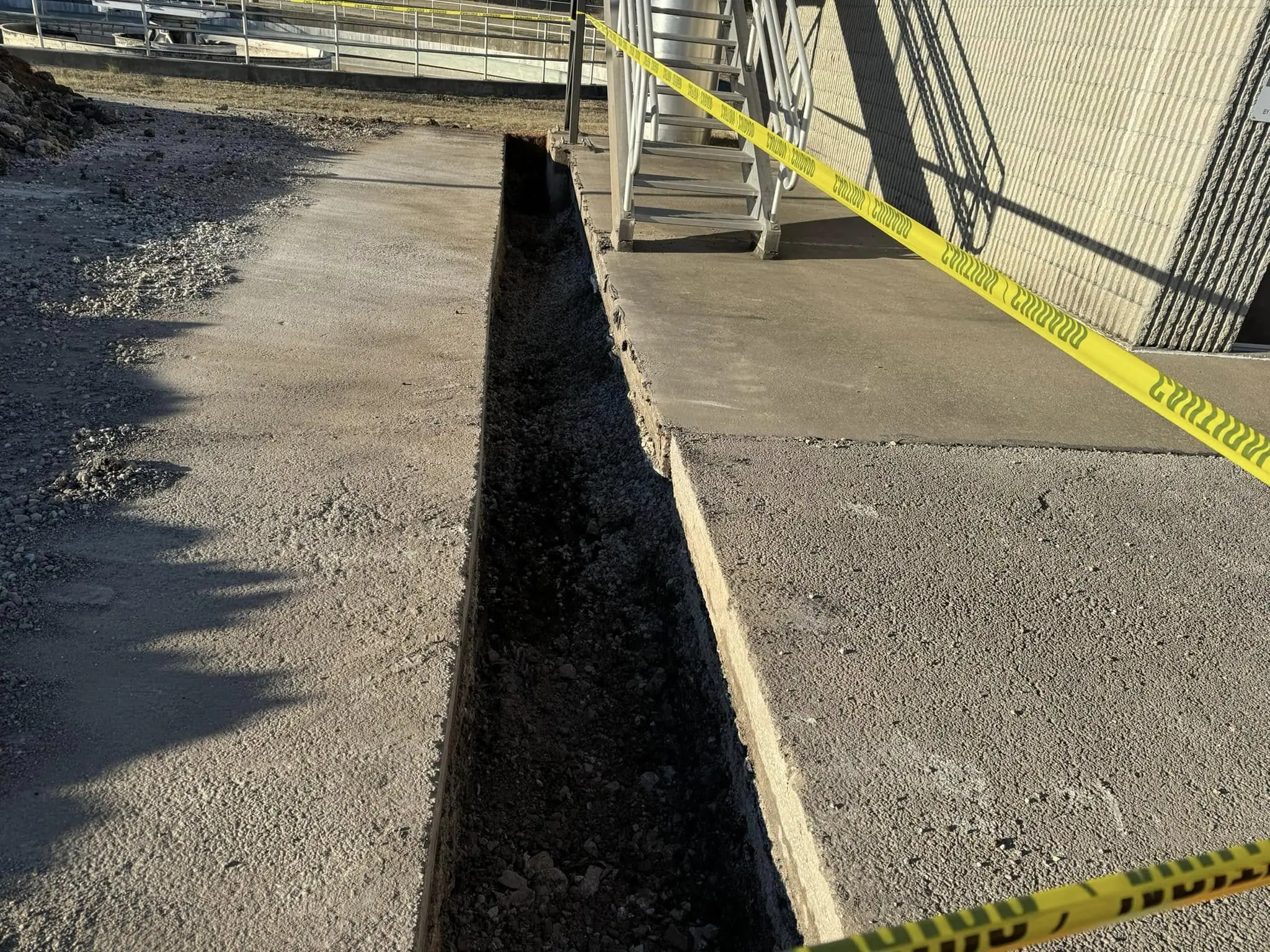
1. Drainage Work Before Winter Rains Return
If water is pooling somewhere it shouldn’t, or if your basement took on moisture during the fall storms, November is the right time to address it. Trenching for French drains, installing culverts, regrading yards for positive drainage — all of this work goes smoothly in firm-but-not-frozen ground.
Wait until December or January and two things happen. First, the top 8-12 inches of soil freezes, which means equipment has to chip through it before getting to real digging. Second, any subsurface pipe installation becomes harder because the bedding material freezes together in piles before it can be placed.
For southwest Missouri, late November is typically the last week of easy drainage work. The forecast might look mild on any given day, but overnight lows drive the frost deeper, and it doesn’t thaw out until late morning.
Why it matters now: Spring brings the wettest months of the year in Missouri — March through May averages 4-6 inches of rain per month. Any drainage problem you don’t fix this fall shows up as a wet basement, flooded yard, or eroded driveway in April.
2. Pond Cleaning While Water Is Low
November is genuinely the best month of the year to clean out a pond in SW Missouri. Water levels are naturally low from summer evaporation and reduced rainfall. The banks are firm enough for equipment. Fish are less stressed by cooler water during relocation.
Wait until spring and you’re fighting the opposite of every one of those conditions. Water is high from snowmelt and rain. Banks are soft. Fish are active and spawning. Getting equipment close to the pond edge without making a mess becomes impossible.
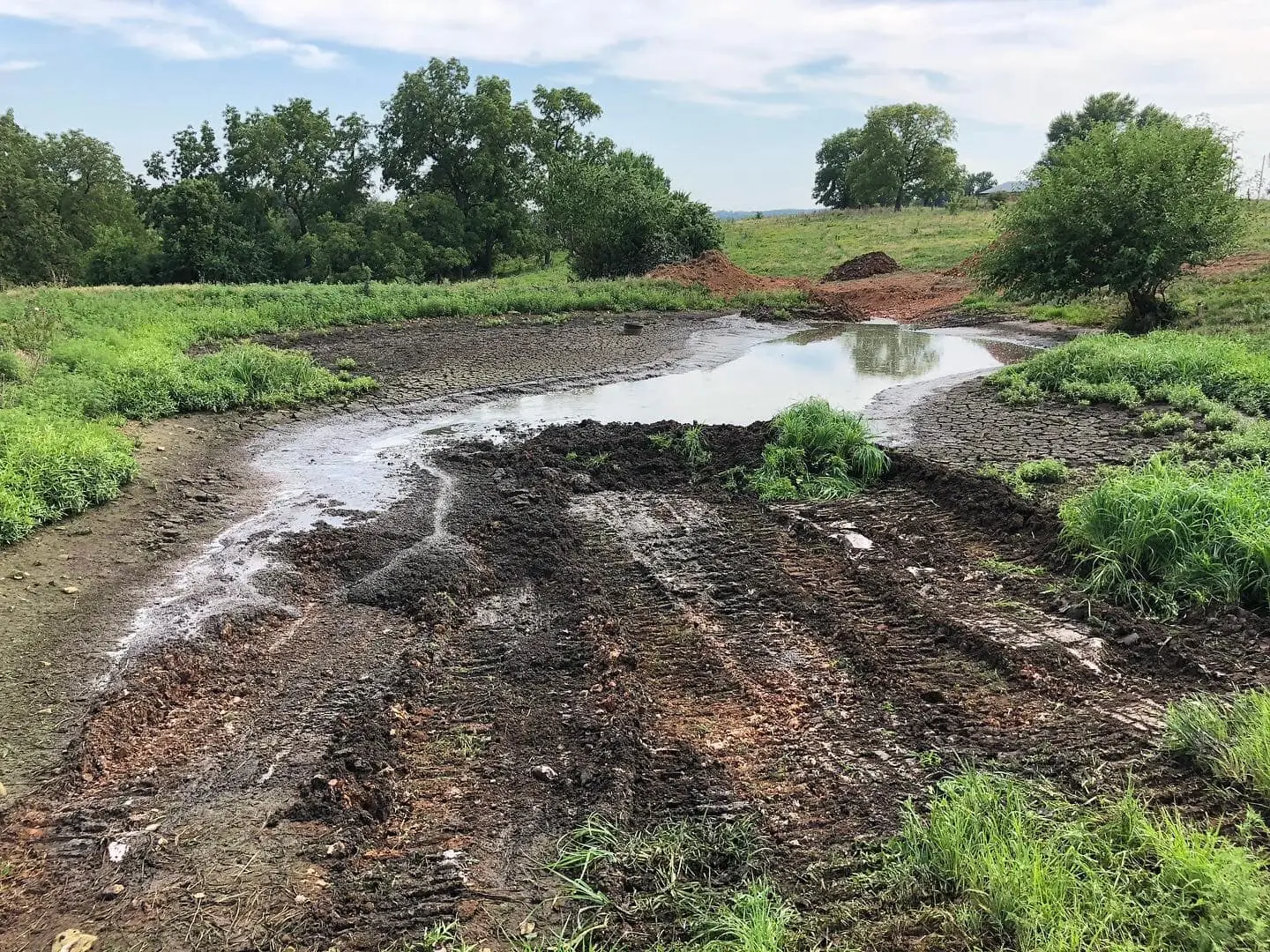
For properties with ponds that have lost depth, accumulated muck, or developed bank erosion, the call-ahead window for November work is closing fast. Most pond cleaning jobs take 5-10 working days. Scheduling now is still possible, but another two weeks and conditions shift.
Why it matters now: Pond work delayed to spring or summer is dramatically more expensive and produces worse results. The annual window for clean, fast pond cleaning is about six weeks long — and it’s almost over.
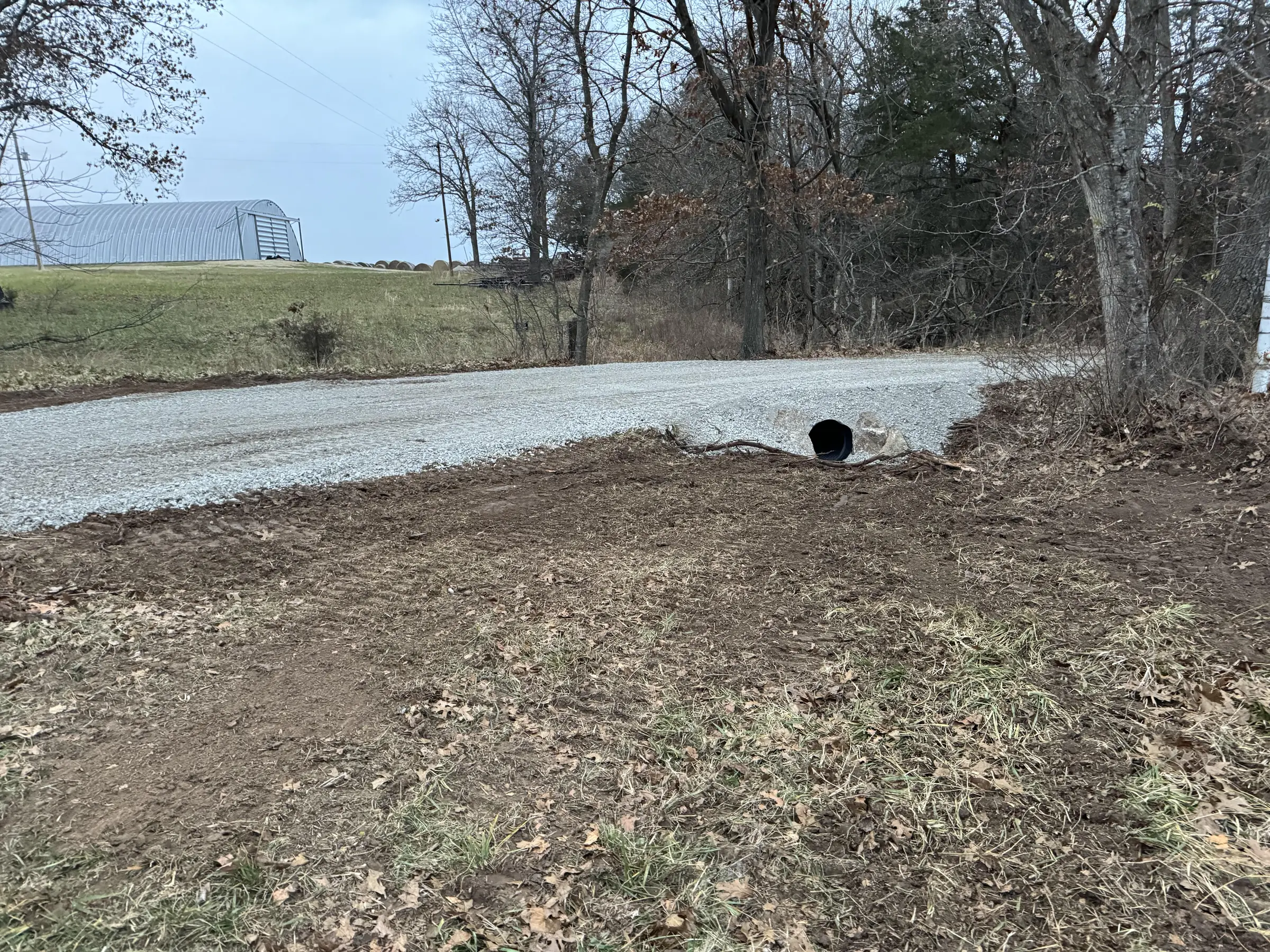
3. Gravel Driveway Top-Up and Regrading
A gravel driveway loses material every year. Rain, traffic, freeze-thaw cycles, and snow plowing all move gravel around. By November, a driveway that was perfect last spring is probably down a couple inches of material and showing ruts in the low spots.
A routine refresh takes half a day to a day: grade out the ruts, spread 1-2 inches of fresh rock, compact. Done right, it’s invisible when the work is finished — and the driveway is ready to handle winter without developing potholes under the ice.
Citation capsule: In southwest Missouri, gravel driveways that receive annual November top-ups typically require major reconstruction every 15-20 years rather than every 8-10 years. The modest cost of seasonal maintenance — usually $500-$1,500 for a standard residential driveway — directly extends the life of the base layer underneath. Skipping the annual refresh allows freeze-thaw cycles to damage both the surface and the subgrade.
Skip the November maintenance and the driveway gets worse over winter, fast. Snow plows catch in the ruts. Ice forms in the low spots and doesn’t melt until March. By spring, what would have been a $1,000 job becomes a $3,000-$5,000 rebuild.
Why it matters now: Frozen ground makes gravel grading and compaction impossible. November is the last chance until April or May.
4. Land Clearing Before Hunting Season Ends and Winter Sets In
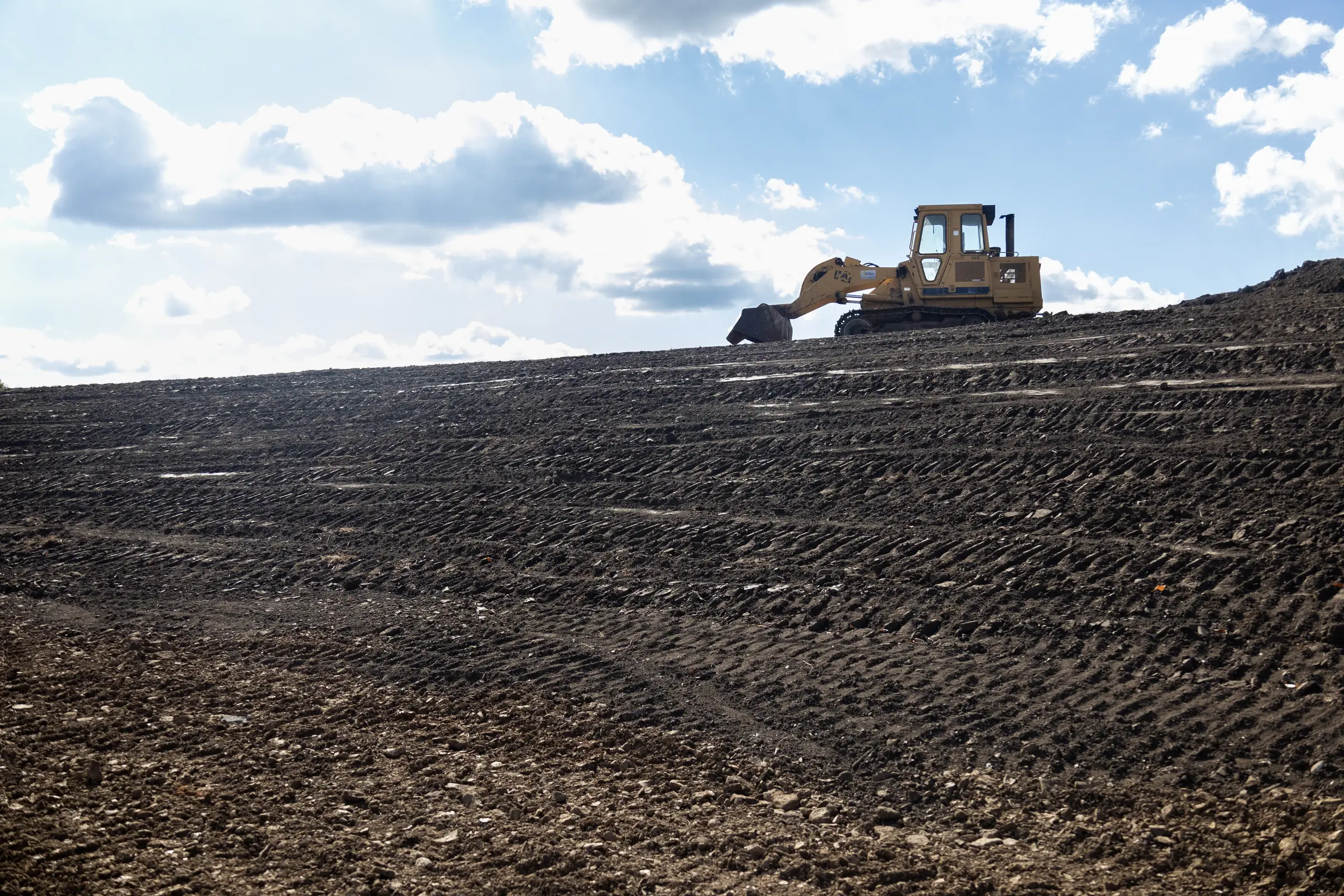
Land clearing actually gets better as the season progresses into late fall. Deciduous trees have dropped their leaves, so visibility through woods is excellent. Ground is firm. Pests are dormant. The crew can work comfortably.
But by December, three problems start stacking up: hunting season limits weekend access on some properties, the first ice storms can pause work for a week at a time, and the hard freeze makes stump removal much slower.
If you’ve been thinking about clearing a fence row, opening up a pasture, or prepping a building site, November is the sweet spot of the year. The work moves fast, the pricing is good, and the site is ready by spring for whatever comes next.
Why it matters now: Late fall clearing is efficient. Winter clearing is workable but slower. Spring clearing is a mess and gets delayed by rain. November clearing done in one pass usually equals six weeks of stop-and-start spring work.
5. Site Prep for Spring Construction
If you’ve got a 2026 building project — new home, pole barn, addition, garage — the site preparation work can happen now. Rough grading, tree removal, utility trenching, and pad prep can all be completed in November.
Getting the dirt work done this fall means:
- The site settles over winter (good thing)
- Any drainage issues show up while there’s time to fix them
- The building crew can start work in March instead of waiting on site prep
- You lock in current-season pricing before 2026 material and labor increases
Spring construction projects that try to compress site prep and foundation work into one continuous sprint almost always run over schedule. Separating the two — site prep in November, foundation in March — produces cleaner builds and fewer expensive surprises.
Why it matters now: Good excavation contractors book 2026 spring projects starting in October-November of 2025. Waiting until February to think about spring site prep means landing at the bottom of someone’s priority list.
What Happens If You Wait
Citation capsule: Excavation projects in southwest Missouri that miss the late-fall window (roughly through mid-November) typically face delays of 3-5 months before the ground firms back up for reliable work, often running from the first hard freeze in late November through mid-to-late March. During that delay period, contractor schedules fill up rapidly, and the cost of rushing work in the muddy early spring commonly adds 15-30% to project totals compared to November pricing.
Here’s the honest math on waiting:
Delay to January-February: Ground is frozen. Some work continues (clearing, above-frost-line jobs), but many projects pause.
Delay to March-April: Worst possible season. Muddy, wet, soft ground. Schedules booked out 4-6 weeks. Work that would have taken one week in November takes two weeks in April because of weather days.
Delay to May-June: Peak construction season. Pricing goes up with demand. Schedules booked 6-8 weeks out. Quality stays good but cost and timing get worse.
The simplest way to think about it: any excavation work you finish before Thanksgiving is easier, cheaper, and cleaner than the same work done any time between December and May.
Getting on the November Schedule
If any of the five projects above apply to your property, the next two to three weeks are the time to make the call. Site walks are still happening daily, quotes go out within a few days, and most work can start within a week or two of acceptance.
Calvin Smith Excavating handles clearing, grading, drainage, pond work, driveway installation, and site prep across Walnut Grove, Springfield, Republic, Bolivar, Ash Grove, Willard, Nixa, and Ozark. Owner-operated, USDOT 4119419, fully insured. Free site walks, honest quotes.
Call (417) 719-0643 to get on the pre-freeze schedule.
Frequently Asked Questions
When does the ground typically freeze in southwest Missouri?
First hard freezes usually hit between late November and mid-December, with 1-2 inches of frost penetration. By January, frost can reach 8-18 inches deep. Some thawing happens during warm stretches, but most excavation work becomes impractical from mid-December through mid-March. The exact timing shifts year to year based on weather patterns.
Is it actually cheaper to do excavation work in November vs. spring?
Often yes. November pricing typically lands at the lower end of a contractor’s quoted range because demand is lower than peak spring and summer. Spring excavation demand drives pricing up and creates scheduling pressure. A November project that quotes $8,000 might run $10,000-$11,000 if the same scope is scheduled for April.
What if I can’t get the work done in November?
Some work still happens through winter — land clearing, surface grading, demolition, and shallow trenching all work on firm cold-weather ground. Concrete pours, deep trenching, and pond filling are the operations that really need to wait for spring thaw. Talk through your specific project to see what’s feasible when.
How much lead time do I need to book November excavation work?
For a small project (1-2 days), 1-2 weeks of lead time usually works. For larger scopes (week-plus of work), book 3-4 weeks out. By mid-November, remaining November slots fill up quickly — don’t wait past the first week of November if you want to hit the pre-freeze window.
Can excavation equipment work in freezing weather?
Yes, but with limitations. Modern diesel equipment starts and operates down to about 10-20°F reliably. Below that, cold-start procedures slow things down, and operator comfort becomes a safety concern. More critically, the ground itself starts to work against the equipment — deep frost limits what can be dug, and frozen spoils can’t be worked until they thaw. Most serious excavation work pauses when overnight lows drop below 20°F consistently.
Calvin Smith Excavating — year-round excavation across SW Missouri, with November being the best month of the year to finish drainage, pond, driveway, clearing, and site prep work before winter. Call (417) 719-0643.