

Demolition Permits in Springfield MO: What Homeowners Need to Know
If you’re demolishing a structure within Springfield city limits, you almost certainly need a permit. The city requires permits for any structure demolition, and the process includes utility disconnects, asbestos inspection for older buildings, and erosion control plans. Rural Greene County properties outside city limits have fewer requirements but aren’t always permit-free. Here’s what the demolition permit process actually involves.
TL;DR:
– Springfield city limits: demolition permit required for any structure
– Unincorporated Greene County: simpler requirements, but check before you start
– Asbestos inspection required for any building built before 1981
– Utility disconnects must be documented before demolition
– Typical permit cost: $75-$250 plus plan review fees
– Timeline: 1-3 weeks from application to approval for straightforward residential demolitions

Does Your Demolition Need a Permit?
In the Springfield metro area, permit requirements depend on location:
Inside Springfield City Limits
Permits are required for:
- Any residential structure (house, detached garage, outbuilding over 200 sq ft)
- Any commercial structure
- Accessory buildings connected to utility service
- Significant foundation removal
- Partial demolition that affects structural elements
The only things that generally don’t need a permit:
- Small sheds under the 200 sq ft threshold
- Non-structural interior demolition (but you still need permits for the remodel)
- Temporary structures
Outside City Limits (Unincorporated Greene County)
Rural Greene County has lighter requirements but they do exist:
- Structures connected to public water or sewer need disconnect documentation
- Commercial structures always need permits
- Residential structures in unincorporated areas typically don’t need a formal permit but may require a grading plan if significant earth moving is involved
- Any burning of debris requires checking current burn ban status
Other SW Missouri Cities
Each surrounding city (Republic, Nixa, Ozark, Bolivar) has its own demolition permit requirements. Generally similar to Springfield’s approach but with local variations. Always check with the specific city before starting work.
The Springfield Demolition Permit Process
Here’s how a typical residential demolition permit in Springfield works:
Step 1: Pre-Application Requirements
Before applying for the permit, you need:
- Property ownership verification — deed or tax record showing you own the property
- Utility disconnect documentation — letters from water, gas, and electric providers confirming services are disconnected or scheduled for disconnect
- Asbestos inspection report if the structure was built before 1981
- Site plan showing the structure to be demolished and surrounding context
The asbestos inspection is the biggest pre-application cost for older buildings. A certified inspector examines the structure for asbestos-containing materials (ACM) in roofing, insulation, floor tile, and other common 1960s-70s construction. If ACM is found, abatement must happen before demolition — by a licensed abatement contractor, not by the demo crew.
Step 2: Application Submission
The application typically includes:
- Owner information and property address
- Description of structure to be demolished
- Contractor information (if using one)
- Asbestos inspection results
- Utility disconnect confirmations
- Proposed site restoration plan
- Permit fee
Applications are typically filed with Springfield’s Building Development Services department. Some pieces may require the city’s environmental services department.
Step 3: Review and Approval
Standard residential demolition permits typically process in 1-3 weeks depending on city workload. Plan review checks for:
- Complete asbestos documentation
- All utility disconnects verified
- Erosion and runoff control plan (especially for hillside or creek-adjacent properties)
- Proper contractor licensing if you’re hiring out
- Any landmark or historic district considerations
Step 4: Approved Permit
Once approved, the permit is issued with any conditions attached. Common conditions:
- Erosion control measures must be in place before work starts
- Debris must be hauled to an approved facility (most demolition debris goes to the Sanitary Landfill)
- Site must be graded to sheet water properly after demolition
- Final inspection required before permit is closed

Step 5: Perform the Demolition
With permit in hand and utilities disconnected, demolition proceeds. A typical small residential demolition (single-family home under 2,500 sq ft) takes 1-3 days of active work plus debris hauling.
Larger structures, buildings with basements, or structures with significant metal or concrete take longer. Most Springfield demolitions stretch to 3-7 days including cleanup.
Step 6: Final Inspection and Permit Closure
After demolition is complete and the site is cleaned up, a final inspection by the city closes out the permit. Inspectors look for:
- Complete structure removal (including foundation if required)
- Site graded to drain properly
- Erosion control still in place if needed
- No remaining debris
- Proper fill if a basement was excavated
What Demolition Costs in the Springfield Area
Citation capsule: In the Springfield, Missouri metro area, residential demolition costs typically run $3-$8 per square foot for straightforward single-family structures, including permit fees, asbestos abatement if required, utility disconnects, and debris hauling. Older buildings with extensive asbestos-containing materials can increase total project cost by $2,000-$10,000 for abatement work alone.
Typical Springfield-area demolition costs:
| Structure type | Typical cost range |
|---|---|
| Small outbuilding (under 500 sq ft) | $1,500-$4,000 |
| Detached garage | $2,500-$6,000 |
| Mobile home | $3,500-$7,000 |
| Single-family house (1,500 sq ft) | $8,000-$18,000 |
| Larger house with basement | $15,000-$30,000 |
| Commercial structure | Highly variable |
Major cost drivers beyond square footage:
- Asbestos abatement if required (pre-1981 buildings)
- Landfill tipping fees — vary by material and weight
- Concrete disposal — concrete recycling is often cheaper than landfill
- Salvage credits — metal, usable materials can offset cost
- Foundation removal — basement demolition costs 2-3x slab-only demo
- Utility service capping — handled by utility companies, fees vary
Environmental and Safety Considerations
Demolition isn’t just tearing things down. Several environmental rules apply:
Asbestos — the big one. Any building built before 1981 is suspect. Roof shingles, floor tile, pipe insulation, siding materials can all contain ACM. Disturbing ACM without proper abatement releases fibers that cause serious lung disease. This is not a place to cut corners.
Lead paint — pre-1978 buildings often have lead-based paint. EPA rules apply to how this is handled during demolition.
Refrigerants — any HVAC equipment or appliances have to have refrigerants properly recovered before demolition. Not something a demo crew does — it’s a separate trade.
Underground storage tanks — any old residential oil tanks, septic tanks, or fuel tanks must be identified, emptied, and properly disposed of. Missing a UST can trigger environmental cleanup requirements.
Erosion and runoff — after demolition, the bare ground is prone to erosion. Silt fence, erosion control blankets, or other measures are often required, especially on sloped properties.

Coordinating Demolition with Excavation
Most demolition projects are part of a larger plan — tearing down an old structure to build a new one, clearing a property for sale, or removing a damaged building. Coordinating the demolition with the follow-on excavation and site prep saves money.
At Calvin Smith Excavating, we handle:
- Small residential demolition (sheds, garages, mobile homes, small homes)
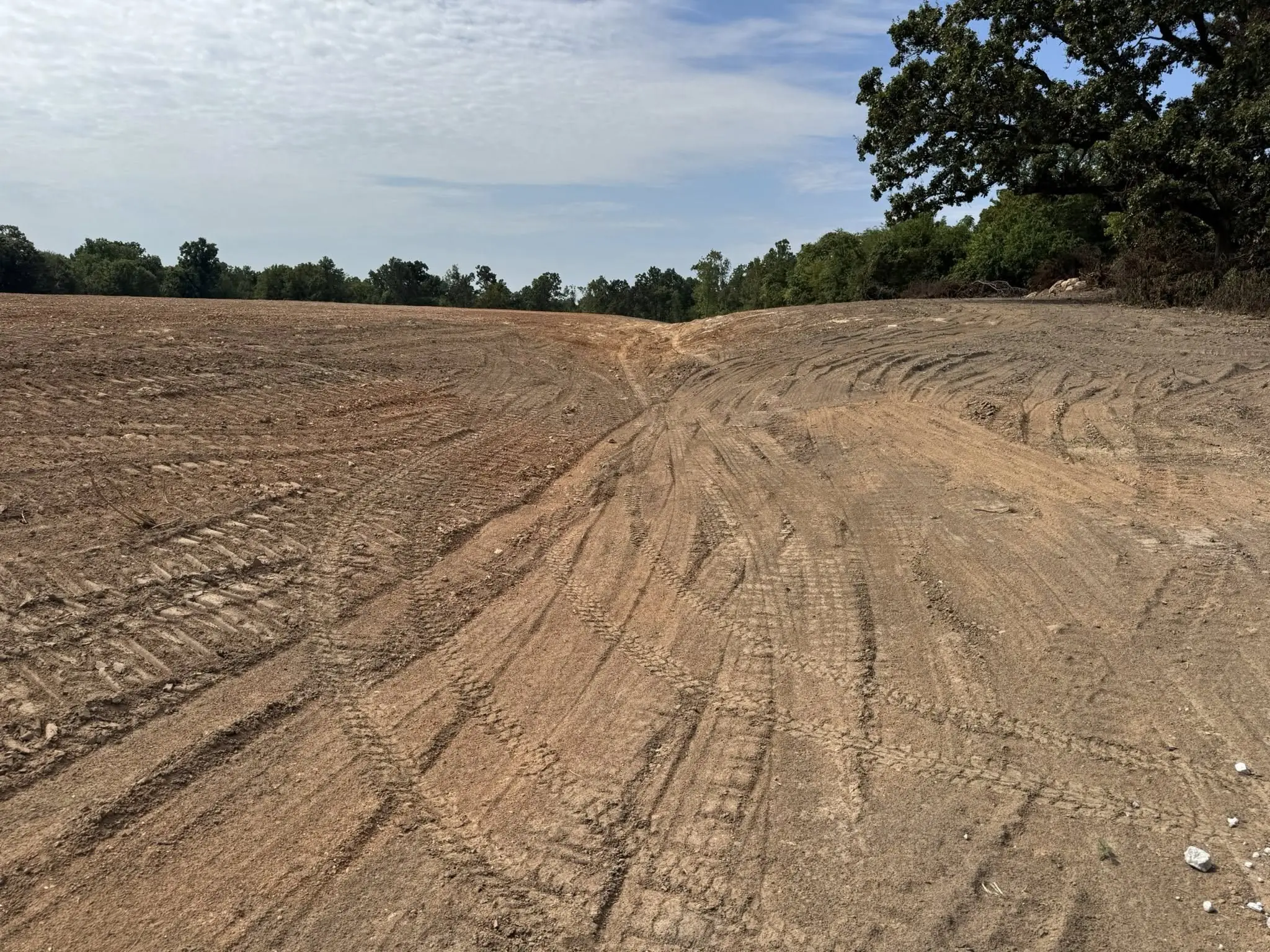
- Post-demolition site cleanup and grading
- Foundation removal and excavation
- Site prep for new construction
- Coordination with asbestos abatement contractors for older structures
For larger commercial demolition or structures requiring specialized equipment, we refer to specialist demolition contractors. Not every excavator handles demo work, and honesty about scope is part of doing right by the customer.
Getting Started on Your Project
If you’re thinking about demolishing a structure in the Springfield metro area, call early. The permit process takes time, and projects scheduled without that lead time get delayed.
Call (417) 719-0643 to discuss your demolition project. We’ll walk through what’s involved, flag anything that needs special attention, and coordinate the permit and excavation work together.
Frequently Asked Questions
How long does a Springfield demolition permit take?
Straightforward residential demolitions typically take 1-3 weeks from application submission to approved permit. Projects requiring asbestos abatement take longer because the abatement must be completed before demolition can start. Allow 4-6 weeks total lead time for most residential demolitions.
Do I need a permit to demolish a barn on my rural property?
If the barn is in unincorporated Greene County and not connected to public utilities, usually no formal permit is required. If it’s in a municipality (Springfield, Republic, Nixa, Ozark, Bolivar) or connected to public services, a permit is required. Always check with your local permit office before starting.
How much does asbestos abatement cost?
For a typical pre-1981 single-family home with moderate asbestos content, abatement runs $2,000-$8,000. Heavily affected buildings with extensive asbestos in insulation, roofing, and siding can exceed $15,000. The asbestos inspection (required before demolition permit) costs $400-$1,500.
Can I demolish a structure myself?
For small outbuildings in rural areas, yes. For anything requiring a permit (almost anything in city limits), the permit typically requires a licensed demolition contractor. Self-demolition also doesn’t address asbestos, lead, or utility disconnects properly — so it’s rarely the right answer for residential buildings.
What happens to demolition debris?
Most goes to a sanitary landfill. Concrete is often sent to recyclers. Scrap metal is separated and sold, offsetting costs slightly. Treated wood, painted materials, and anything containing ACM have specific disposal routes. Proper debris handling is a significant part of the total demolition cost — sometimes 30-40% of the job.
Calvin Smith Excavating — demolition, site prep, and excavation across SW Missouri. Permit coordination included on residential projects. (417) 719-0643.