

Fall Land Clearing in the Ozarks: Why Now Is Prime Time
September through November is the best window of the year for land clearing in SW Missouri. Firm ground, dropping leaves, mild working temperatures, and a lull in spring construction demand all line up in your favor. If you’ve been putting off a clearing project, fall is the time to stop putting it off.
TL;DR:
– Best months: September through mid-November
– Why: firm dry ground, leafless visibility, no summer pests, open contractor schedules
– Worst-case backup: late November into early December still works if winter comes early
– Book early: fall clearing calendars fill up fast — reach out in July or August for the best dates
– Bonus: fall-cleared land is ready for spring seeding or construction with no wait
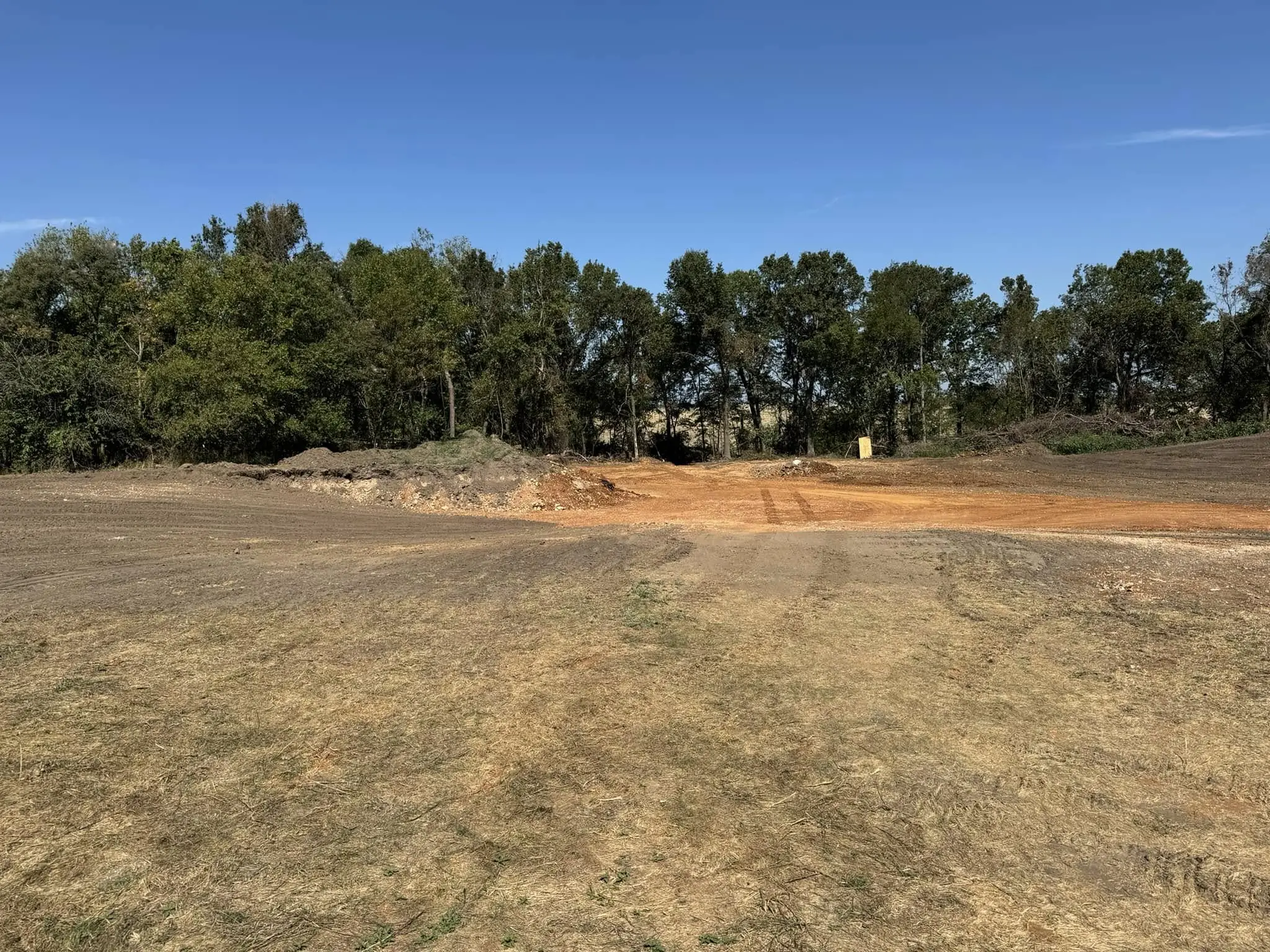
Why Fall Beats Every Other Season in SW Missouri
Each season has trade-offs for land clearing. Fall is the only one where everything works in your favor at the same time.
Ground Conditions
By September in SW Missouri, the ground has usually dried out from summer and firmed up for equipment. Heavy equipment moves without rutting. Trenches and pits hold their walls. The mud of spring and early summer is long gone.
October typically brings the driest ground of the year. Even if rain comes through, it dries faster than spring rain because evaporation is still active. That means fewer weather delays on a clearing project.
November can still work, though by late November the ground starts to freeze overnight and thaw during the day. That freeze-thaw can create surface issues if you’re not careful, but most of the work is still feasible.
Visibility
As leaves drop off the oaks, hickories, walnuts, and other deciduous hardwoods, you can actually see your property. That matters in two ways:
- Marking trees to keep — you can see trunk quality, branch structure, and spacing clearly
- Identifying problem areas — drainage issues, erosion, invasive plants all become visible once the foliage drops
Cedar, which keeps its foliage year-round, is the exception. But most SW Missouri woods are a mix of deciduous and cedar, and the cedars stand out against a leafless background in a way they don’t in summer.
Pest and Wildlife Windows
Summer clearing work means ticks, chiggers, snakes, and heat stress. By October, most of those issues have calmed down. Ticks and chiggers drop dramatically after the first hard frost. Snakes become lethargic as temperatures cool. Working on a property in fall is simply more pleasant — which matters for the crew and for anyone walking the site after work.
Contractor Schedules
Spring in SW Missouri is when every new construction project wants to start. Excavators are booked solid. Summer is the high-production season for commercial and residential work. By September, that rush has eased, and clearing contractors have more flexibility in scheduling.
That flexibility often translates to better pricing. Not always dramatically, but an off-peak clearing job tends to come in at the lower end of the quoted range rather than the top.

What Fall Clearing Looks Like
Here’s the typical workflow for a fall clearing project in SW Missouri:
Early September: Schedule the Job
Most good clearing contractors are booking September and October jobs by late July. If you want a specific week in fall, reach out 6-8 weeks ahead.
During the site walk, we discuss:
- What to keep and what to clear
- Debris handling (burn, chip, or haul)
- Access for equipment
- Any permit or utility concerns
- Expected weather delays built into the schedule
Mid to Late September: Start the Work
Temperatures are mild (typically 60s-70s during the day), ground is dry, days are still reasonably long. This is the easiest time of year to get productive work done.
Debris handling choice matters here. If you want to burn on site, late September can have good burning windows — cool enough to control, dry enough to burn clean. By November, county burn bans or wet conditions can shut down burning.
October: Peak Clearing Season
The sweet spot. Hardwoods have dropped most of their leaves, so you can see the land clearly. Ground is firm. Weather is generally stable. Most experienced operators prefer October clearing over any other time of year.
If you have a large project, October is also the right time to schedule it because the work window is longest and weather delays are shortest.
Early November: Still Good, Watch the Weather
Early November typically works well. Late November starts getting dicey — first hard freezes, potential for early winter weather, shorter days. Most clearing projects scheduled for early November should plan for completion by Thanksgiving to be safe.
After First Hard Freeze
If winter comes in hard (ice storm, heavy early snow), clearing pauses until conditions allow. That might be a week, might be a month. Having the job done by mid-November avoids this risk.
What Fall Doesn’t Fix
Citation capsule: Fall clearing in southwest Missouri takes advantage of the region’s driest ground conditions, leafless deciduous canopy visibility, and reduced contractor demand between peak spring construction season and winter weather stoppages. September through early November typically offers the highest per-acre clearing productivity of any season in the Ozarks.
Fall isn’t magic. A few things are still worth knowing:
Rock is still rock. The Ozarks’ shallow limestone bedrock doesn’t care what season it is. If your property has rock, stump removal will still be slow.
Access matters. A hard-to-reach site is hard to reach in any season. If equipment has to navigate a narrow gate or long driveway, that cost and time stay the same.
Weather still happens. Fall is typically stable, but surprise storms or early winter systems can still cause delays. Plan a 10-20% buffer on any schedule.
Debris piles need handling. If you’re burning, conditions have to cooperate. If you’re chipping, the work continues but takes longer.

Plan Ahead for Next Spring
One of the best reasons to clear in fall: by spring, your land is ready for the next phase. Cleared ground over winter settles naturally. By March or April, you can begin grading, seeding, planting, or building on land that’s had months to stabilize.
Common next steps for fall-cleared property:
- Pasture establishment — seed in early spring for summer grazing
- Building site prep — grade and pad work starts in late winter or early spring
- Orchard or planting — tree planting late winter for spring growth
- Pond construction — foundation work done in spring once the ground thaws
- Driveway and access roads — rough in during winter, finish in spring
Fall clearing sets up everything that follows. Spring clearing creates a one-month delay on whatever you were going to do next.
Booking Your Fall Clearing
If you’ve been thinking about clearing a fence row, a wooded lot, or a pasture that’s reverted to brush, now is the time to get on a schedule. Fall calendars fill up fast.
Calvin Smith Excavating handles land clearing across Walnut Grove, Springfield, Republic, Bolivar, Ash Grove, Willard, Nixa, and Ozark. Owner-operated, free site walks, honest quotes.

Call (417) 719-0643 to get on the fall schedule.
Frequently Asked Questions
How early do I need to book fall land clearing?
For a specific week in September or October, reach out 6-8 weeks ahead (July or early August). For more flexible timing in November, 3-4 weeks’ notice is usually fine. Large projects (10+ acres) need longer lead time because they occupy the crew for multiple weeks.
What if I miss the fall window?
Winter clearing (December-February) still works well in SW Missouri when weather cooperates. Frozen ground supports equipment nicely, and deciduous trees are still leafless. The main risks are weather interruptions (ice storms, heavy snow) and shorter daylight for long projects. Spring (March-May) is the worst time to clear — muddy, scheduling-heavy, and expensive.
Is fall clearing more expensive than other seasons?
Usually not. Fall pricing often lands at the lower end of the quoted range because contractor demand is down from the spring and summer peak. Winter can be even cheaper for projects that can tolerate weather delays. Spring is typically the most expensive season because of high demand and weather-related inefficiency.
Can I burn debris on site during fall in SW Missouri?
Usually yes, but check your county burn ban status. Greene, Polk, and Christian counties each publish current burn ban information. Fall conditions (cool, reasonably moist but dry enough to burn) are often ideal for controlled burning. Mid-October through November tends to be the best burn window before winter conditions take over.
What about clearing during deer hunting season?
Missouri’s firearms deer season typically runs mid-November. Many rural property owners pause major work during that two-week window if they lease hunting rights or if hunting neighbors are a concern. The work can be done before or after. Early to mid-October clearing avoids the hunting conflict entirely and still hits the best conditions.
Calvin Smith Excavating — fall land clearing and excavation across SW Missouri. Book early to lock in your fall dates. (417) 719-0643.