

7 Signs You Need Drainage Work on Your SW Missouri Property
The most common sign you need drainage work is standing water that takes more than 24 hours to disappear after a rain. The second most common is water in a basement or crawlspace after heavy storms. Missouri gets 40-50 inches of rain per year, and the Ozarks’ clay-and-limestone soil has specific drainage patterns that catch new property owners off guard. Here are 7 warning signs to watch for and what each one actually means.
TL;DR:
– Standing water 24+ hours after rain — your yard isn’t draining
– Water in basement or crawlspace — surface water finding an entry point
– Erosion patterns across your driveway or yard — concentrated water flow
– Soft or spongy spots that stay wet — subsurface water problem
– Foundation cracks appearing or growing — hydrostatic pressure pushing soil
– Driveway or walkway heaving — freeze-thaw on saturated ground
– Mosquito breeding areas developing — slow-moving or trapped water
Sign 1: Standing Water That Won’t Go Away
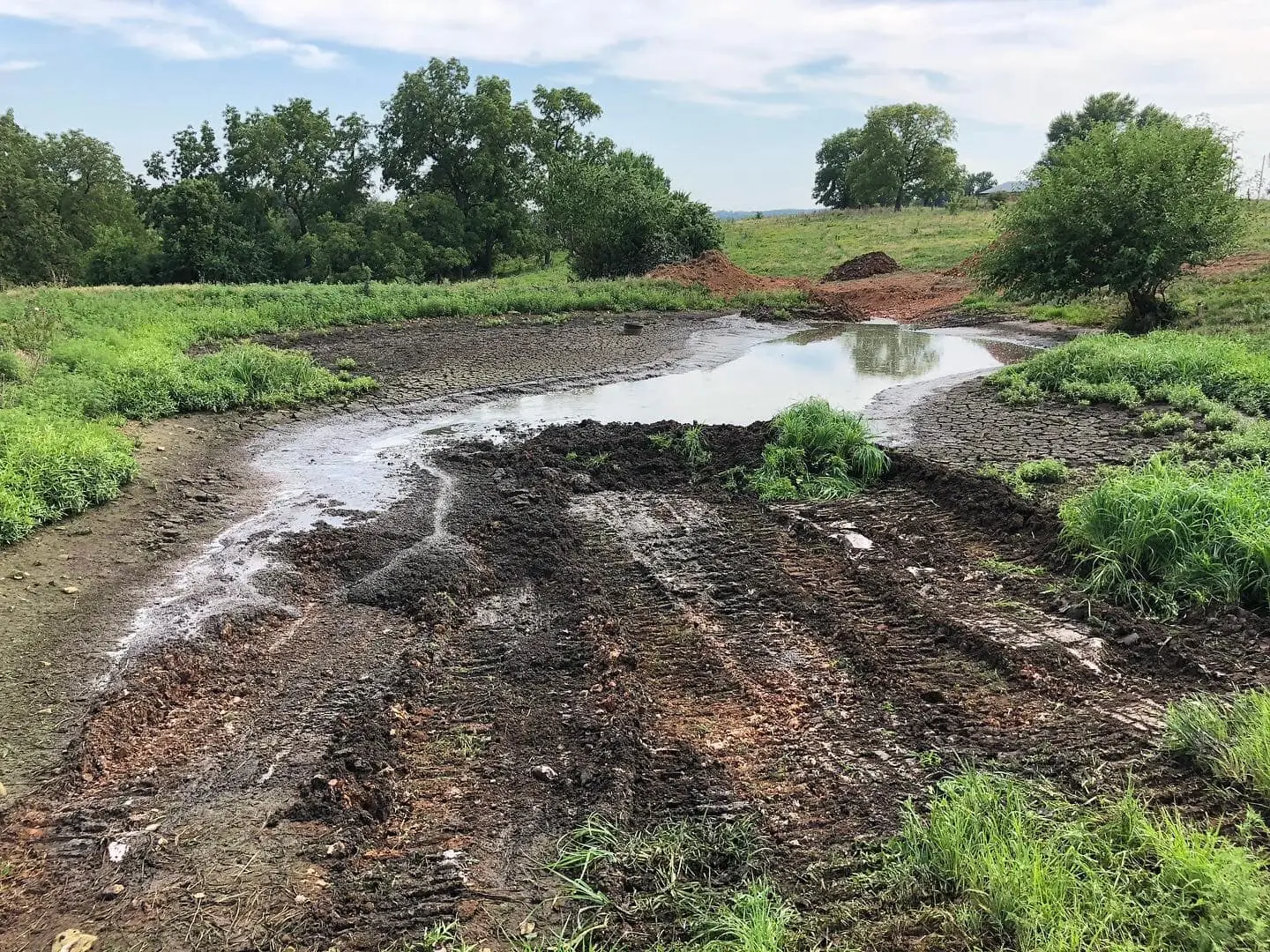
A puddle that lasts a few hours after a thunderstorm is normal. A puddle that’s still there the next day is telling you something. Persistent standing water means either the soil can’t absorb water (compacted clay, high water table) or the grade is wrong (water pooling in a low spot with no outlet).
SW Missouri clay is dense and slow to absorb water. A yard that drains well in your old neighborhood up north might hold water for days in the Ozarks — not because anything’s wrong, but because the soil is different. When standing water is a regular pattern after rain, the fix is usually either regrading to direct water away or installing subsurface drainage (French drains, channel drains).
Sign 2: Water Entering a Basement or Crawlspace
This one gets people’s attention fast. Water in a basement or crawlspace almost always means surface drainage is sending water toward the foundation. Common causes:
- Negative grade (the yard slopes toward the house, not away)
- Downspouts discharging too close to the foundation
- Clogged or broken foundation drain tile
- Hydrostatic pressure from saturated soil
Before doing interior waterproofing (which is expensive), check the exterior drainage. 70% of basement moisture issues get solved by fixing surface drainage — regrading, extending downspouts, adding a French drain, or installing a swale to divert water around the house.
Sign 3: Erosion Patterns Across the Property
Look for grooves, rivulets, or exposed roots where water has cut paths across the yard. Erosion means water is moving concentrated rather than sheeting evenly. Over time those channels get deeper, carrying soil (and eventually driveway gravel, mulch, or landscaping) away from where you want it.
Common erosion spots in SW Missouri:
- Driveway edges — water running off the driveway cuts into adjacent soil
- Downspout discharges — channels form below roof drainage points
- Property corners — water from uphill neighbors concentrates at boundaries
- Cleared areas without ground cover — freshly cleared land is especially prone until vegetation re-establishes
The fix depends on severity. Minor erosion can be addressed with grading and re-seeding. Major channels need rock check dams, swales, or pipe drainage to move water in a controlled way.
Sign 4: Soft, Spongy Spots That Stay Wet
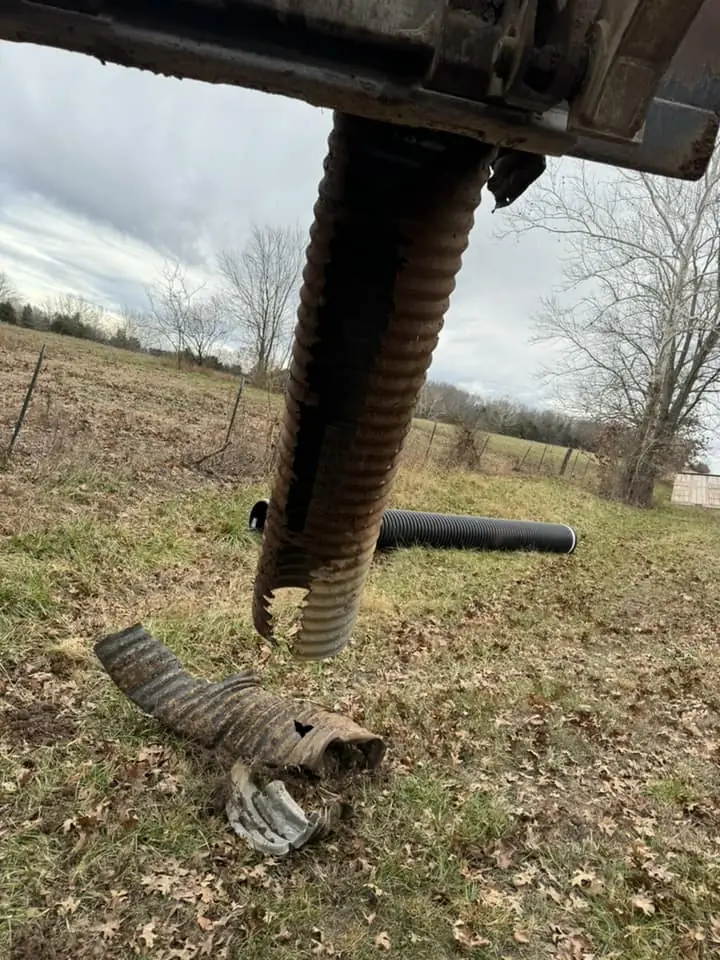
When part of your yard feels soft underfoot even during dry spells, you’ve probably got a subsurface drainage problem. (One important exception in rural SW Missouri: if the soft spot sits over or near your septic drainfield, the cause may not be a drainage problem at all — it may be septic system failure. See our septic repair page for what to watch for.) Something below the surface — usually a natural spring, a leaking water line, or a buried drainage path — is keeping the soil saturated.
Subsurface water problems are trickier than surface drainage because you can’t always see where the water’s coming from. Common sources in SW Missouri:
- Natural springs — common in the Ozarks where limestone bedrock channels water
- Leaking water service lines — check your water bill for unexpected increases
- Buried debris or trash — old rural properties sometimes have fill areas that create drainage anomalies
- Tree root decay — a large dead tree’s root system can hold water as it rots
Diagnosis usually requires careful observation (when does it get wet, when does it dry out) and sometimes excavation to see what’s underneath.
Sign 5: Foundation Cracks Appearing or Growing
Not every foundation crack is a drainage issue, but many are. When water saturates soil around a foundation, that soil expands (especially clay soil, which Missouri has plenty of). Expanding soil puts pressure on the foundation walls. Over time, that pressure causes cracks.
Warning signs that drainage is the cause:
- Cracks appear after heavy rain seasons
- Cracks widen and narrow with wet/dry cycles
- Cracks are concentrated on one side of the house (the uphill side or wet side)
- Interior drywall cracks appearing at corners of windows and doors
Fixing drainage around the foundation is often the first step. Structural repair might still be needed if cracks are severe, but addressing the water source prevents ongoing damage.
Sign 6: Driveway or Walkway Heaving
Citation capsule: SW Missouri experiences 20-40 freeze-thaw cycles per typical winter. Driveways and walkways built on poorly drained ground develop heaving, cracking, and surface damage because saturated soil expands when frozen. Proper drainage beneath and beside hard surfaces can extend their useful life by decades compared to the same installation on undrained or poorly drained soil.
If sections of your concrete driveway or walkway are lifting, cracking unevenly, or separating at joints, saturated soil and freeze-thaw cycling is a likely cause. Water under the slab freezes, expands, and lifts. The cycle repeats every winter until the damage becomes visible.
Fixing this means addressing the drainage before repairing the slab. Otherwise the repair will fail within a few years. Common approaches:
- Install a French drain along the edge of the driveway to capture and redirect water
- Correct the grading adjacent to the driveway
- Add a curtain drain uphill to catch water before it reaches the slab
Sign 7: Mosquito Breeding Areas Developing
Standing water becomes a mosquito breeding site in about 7-10 days. If parts of your property have become noticeably worse for mosquitoes during summer, you probably have water sitting somewhere it shouldn’t.
Common hidden spots:
- Low areas behind outbuildings where water pools
- Poorly graded flower beds with mulch holding moisture
- Clogged gutters and downspout catch basins
- Old tires, buckets, or debris collecting water
- Natural dips in pasture or lawn
Beyond the annoyance, standing water is an indicator that something isn’t draining. Fixing the drainage typically fixes the mosquito issue at the same time.
What Drainage Work Actually Looks Like
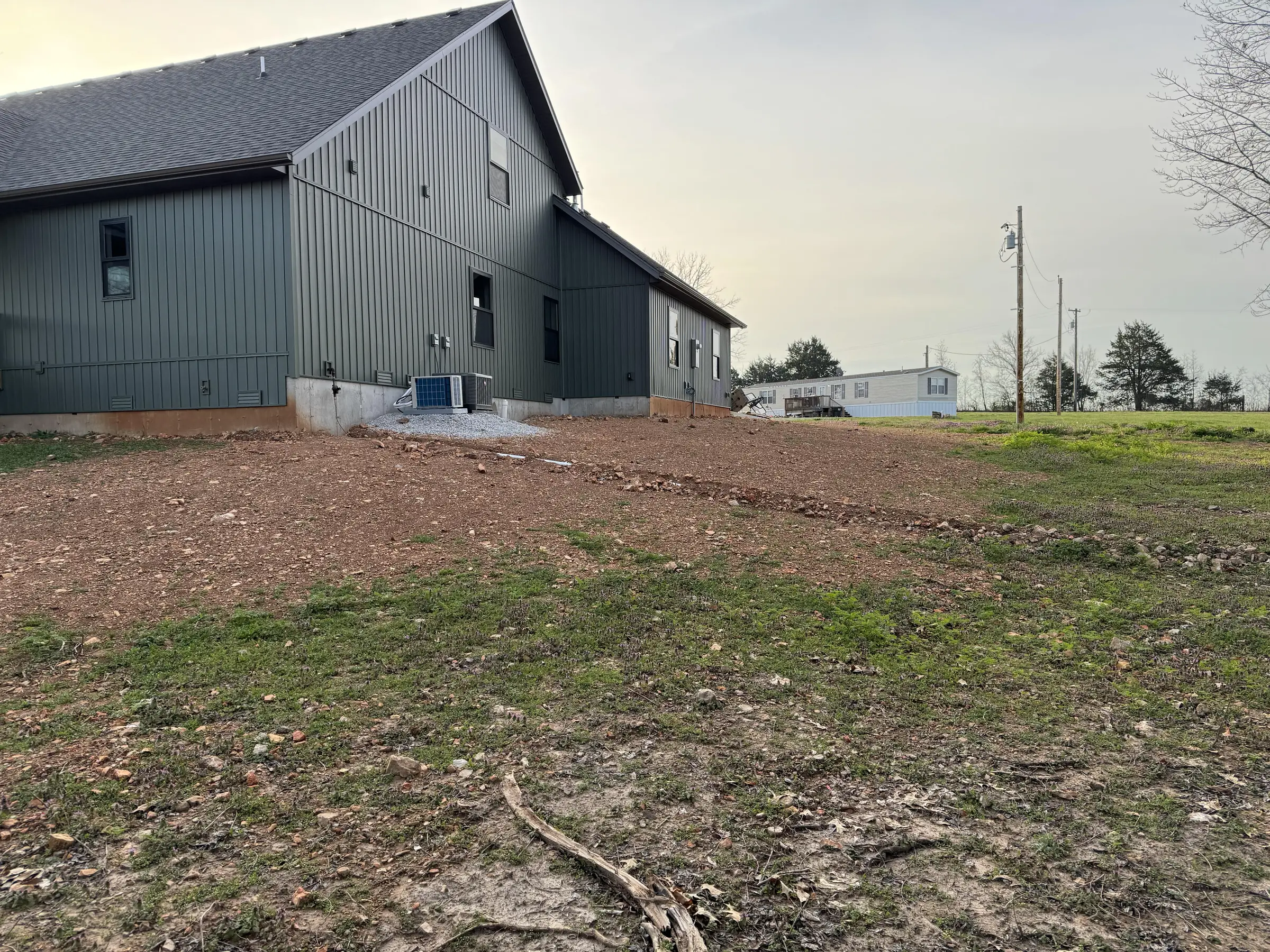
When we come out to diagnose and fix a drainage issue, the typical work includes some combination of:
Regrading: Reshaping the ground surface to direct water flow. Cheap, effective for many surface water problems. Usually needs the yard re-seeded after.
French drains: A trench with perforated pipe surrounded by gravel, installed along or across the problem area. Captures water underground and moves it to a discharge point.
Curtain drains: Similar to French drains but installed uphill of the area being protected. Catches water before it reaches the problem zone.
Swales: Shallow, wide, grass-lined channels that carry water across a property. Looks natural, handles large volumes, low maintenance.
Dry wells: An underground gravel pit that collects water and lets it infiltrate slowly. Good for downspout discharge on properties with otherwise poor drainage.
Downspout extensions: Simple fix — extend roof runoff discharge 10-15 feet from the foundation.
Which combination is right depends on the specific problem. A site walk is necessary to give you a real answer.
Getting Your Drainage Looked At
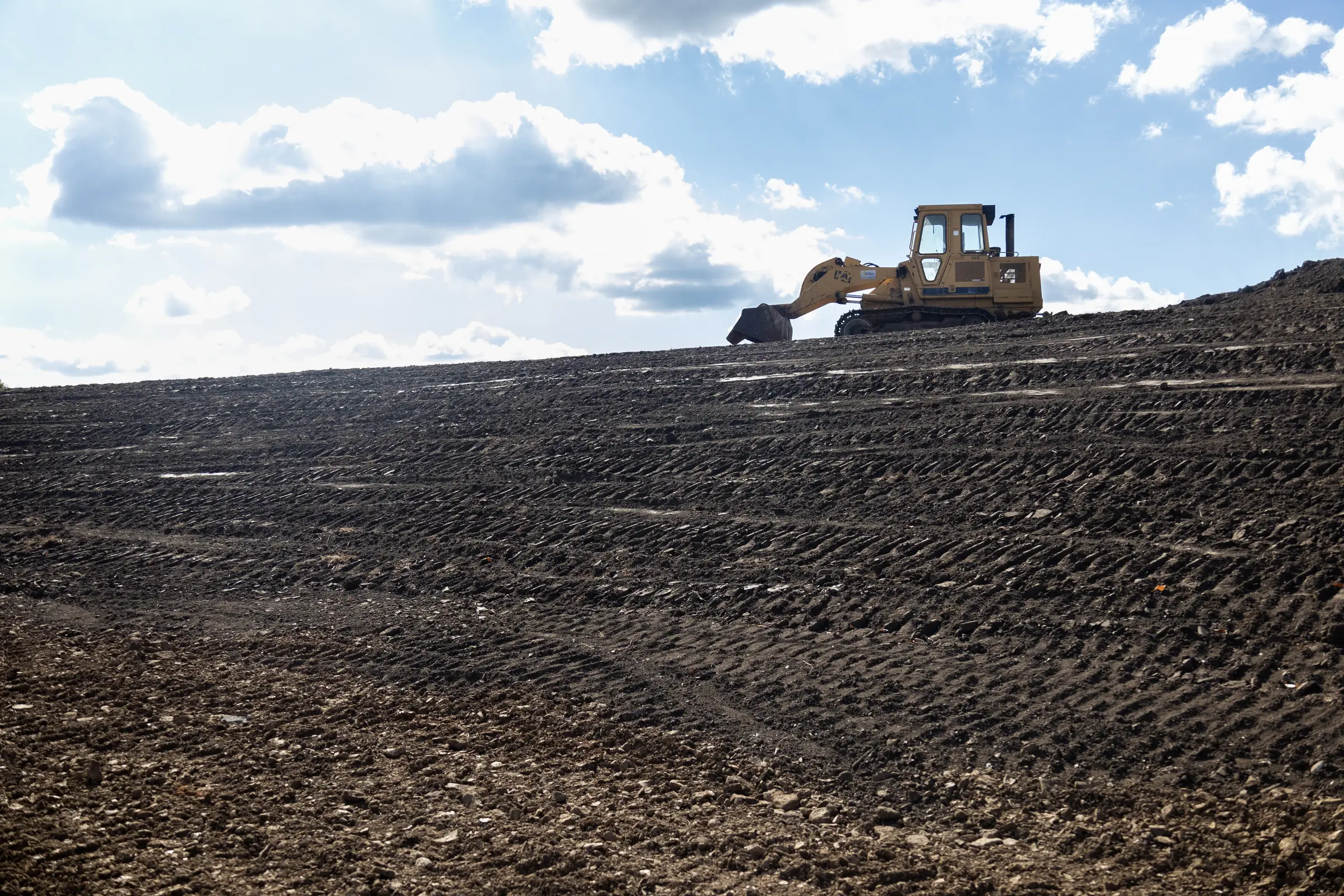
Drainage problems rarely fix themselves. They usually get worse — especially after severe weather. If you’re seeing any of the 7 signs above, a site visit costs nothing and can tell you what you’re actually dealing with.
Calvin Smith Excavating handles drainage assessment and installation across Walnut Grove, Springfield, Republic, Bolivar, Ash Grove, Willard, Nixa, and Ozark. We install French drains, regrade problem yards, build swales, and coordinate with plumbers on foundation drainage tie-ins.
Call (417) 719-0643 for a free drainage site walk.
Frequently Asked Questions
How much does drainage work cost in SW Missouri?
Simple regrading: $1,500-$5,000 depending on area. A French drain typically runs $25-$50 per linear foot installed ($1,500-$4,000 for a standard residential drain run). Full drainage redesign on a problem property can run $5,000-$15,000+ depending on scope. Site walk is free.
Can I fix drainage problems myself?
Some small ones, yes. Extending downspouts, clearing catch basins, regrading a small flower bed. More involved work (trenching French drains, moving significant soil volumes, regrading larger areas) typically needs equipment. A rented mini excavator can handle some DIY drainage work, but the design still matters — a poorly designed French drain is worse than no drain.
How long do drainage solutions last?
Properly installed French drains last 30+ years. Surface grading lasts decades if it was done right to begin with. Swales last indefinitely with minimal maintenance. The failures we see are usually from poor installation (undersized pipe, wrong gravel, no filter fabric) rather than age.
Will drainage work disrupt my landscaping?
Any drainage installation involves digging, so temporarily yes. A typical French drain run tears up a 24-inch-wide strip of yard. We refill and re-seed when the work is done. Landscaping recovery takes one growing season. Larger projects (regrading sections of yard) can be more disruptive but are usually worth it.
Does homeowner’s insurance cover drainage issues?
Usually no. Homeowner’s policies cover sudden events (burst pipe, storm damage) but not gradual water damage from drainage problems. A few exceptions exist for specific flood insurance riders. Best to check your policy — and better to fix drainage proactively than wait for a covered event.
Calvin Smith Excavating — drainage work, French drains, regrading, and water management across SW Missouri. (417) 719-0643.